Just in time for New Years Eve parties we have a DCT matching game. That's right, we are party animals!
Thanks to Malvinder Parmar for the game.
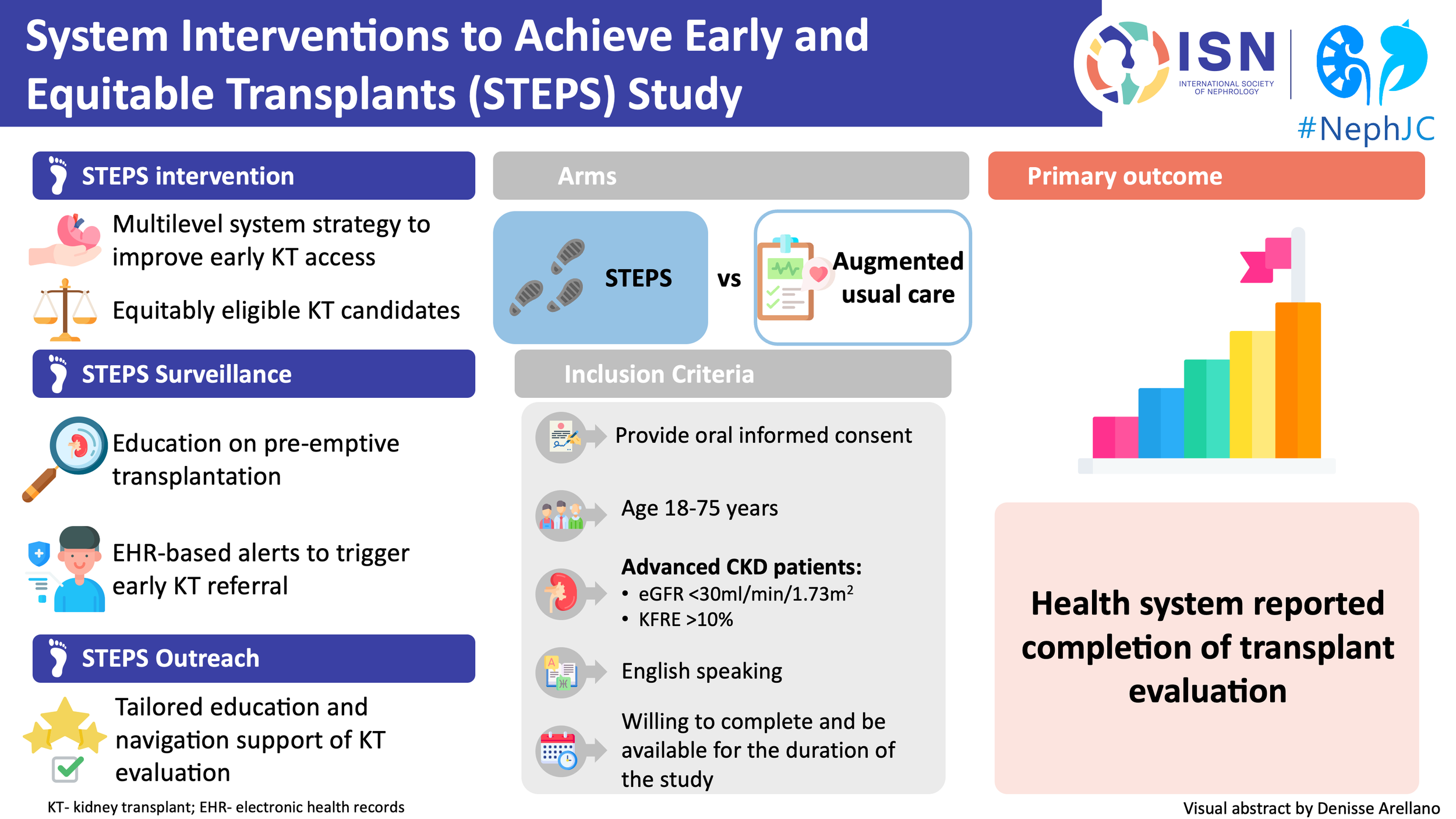
Summary of the STEPS trial which will be a twitter spaces discussion
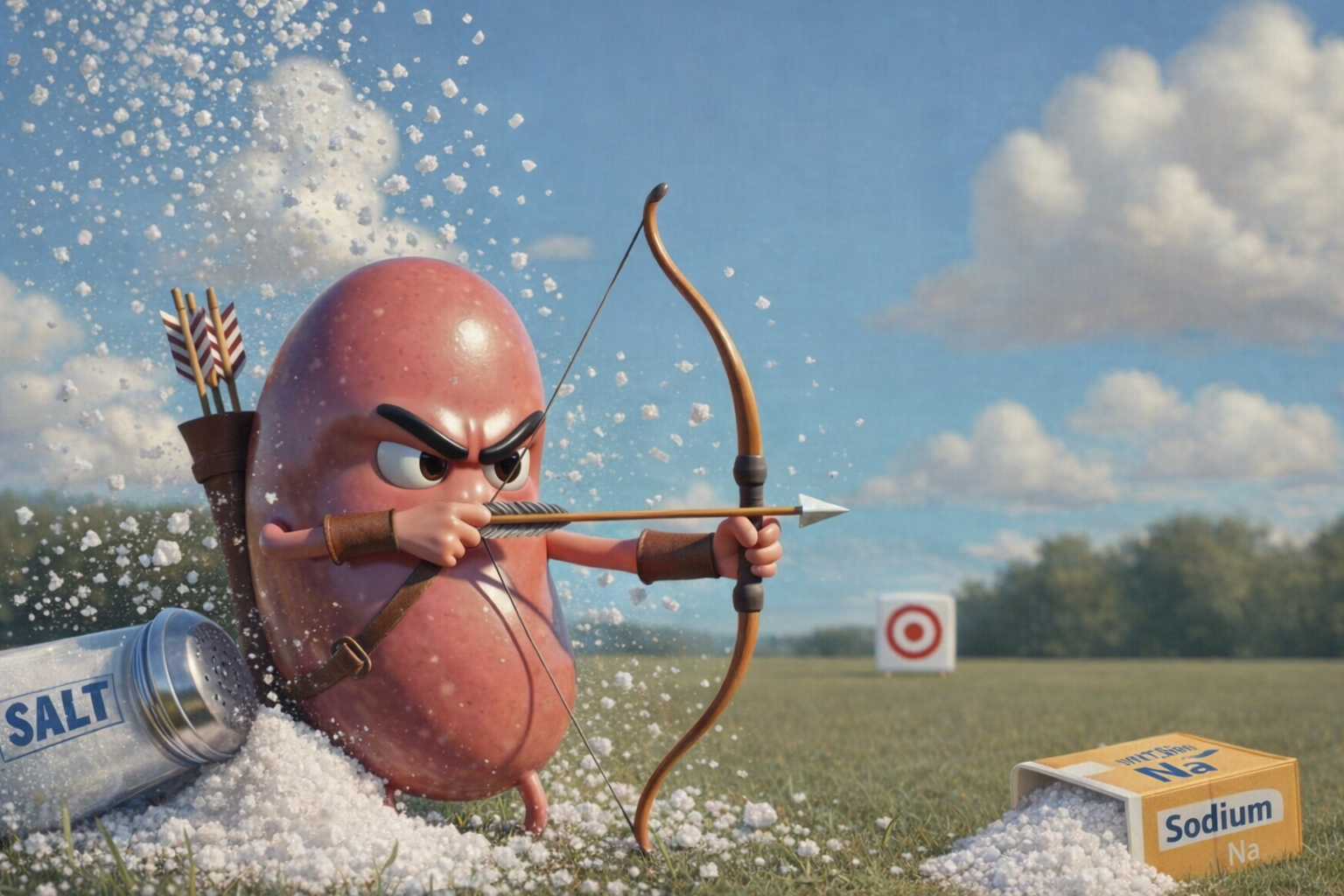
This week, we will discuss the HIT trial- a large randomized study challenging one of the most reflexive responses in hospital medicine: see hyponatremia, fix the sodium. But what if correcting the number doesn’t change what actually matters?
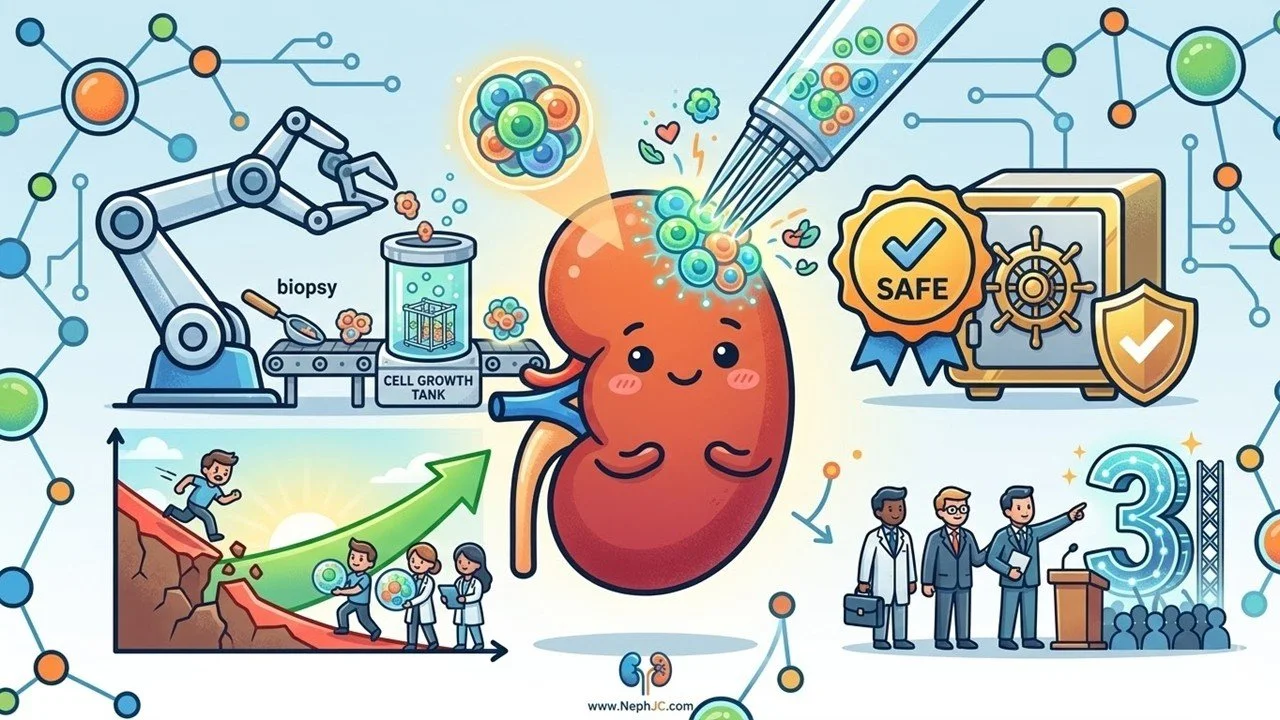
This week, we will discuss the use of renal autologous cell therapy (REACT) in diabetic kidney disease.
Just in time for New Years Eve parties we have a DCT matching game. That's right, we are party animals!

Thanks to Malvinder Parmar for the game.
CJASN is doing an exemplary series on renal physiology. We will be examining the latest article in the series, the distal convoluted tubule, on January 6 and7 for NephJC. The editors wrote a great introduction to the series discussing both the mission and its means last July. The final few sentences from the editorial.
“The reviews will be brief but comprehensive, and, therefore, they will be accessible to practicing nephrologists, clinician educators, and trainees, but of sufficient heft to provide a focused review for renal physiologists. To enhance clarity, we will try to use a single visual vocabulary for diagrams of tubules and glomerular cells to make sure that the illustrations are consistent across the different review articles in the series. We hope that these reviews will be helpful to practitioners and trainees and useful as they teach physiology to the next generation of residents and medical students.”


Social media is becoming a force in medical education the threatens to disrupt the establishment. Free open access medical education (#FOAMed) resources are changing the way doctors learn and keep up to date. Nephrology has been near the front of this revolution with a handful of blogs, innovative crowd-sourced contests like NephMadness and DreamRCT, and a vibrant online journal club (if I do say so myself).

Looking to the future, while the audience for FOAMed is growing, it is clear that nephrology needs more people producing this content. To that end, NephJC is proud to be a founding member of the Nephrology Social Media Collective (NSMC), a loose federation of leaders in social media, that are creating a social media internship for nephrology. The internship is unpaid (like the rest of social media) and open to all doctors and med students interested in the intersection of social media and nephrology. The internship is one year long with much of the learning self directed. However interns will get unique access to some of the leading social media projects in nephrology.
For more information and to apply check out the home page.

Tom Oates did an excellent job taking the helm for our inaugural Old World NephJC. Tom did an excellent job with solid turnout.
A lot of the Nephrons we see on Twitter but don't typically make it to NephJC showed up. Shout outs to:
Florian Buchkremer, nephrologist working in Switzerland, no COI #nephjc
— Florian Buchkremer (@swissnephro) December 18, 2014
Hey! Paul Phelan Nephrologist Edinburgh no COI #nephjc
— Paul Phelan (@paulphel) December 18, 2014
Francesco Iannuzzella, Nephrologist, Italy. NO COI #nephjc
— Fra Ian (@caioqualunque) December 18, 2014
Mathew Koech, from Kenya. Neph Fellow, Tygerberg Hospital in Cape Town, South Africa. #nephjc
— Koech K Mathew (@KoechKM) December 18, 2014
Rupert Beale, Royal Free London/Cambridge late to #nephjc
— Dr_Beale (@Dr_Teacake) December 18, 2014
Any future thoughts on #mdsc myeloid-derived suppressor cells around. #nephjc
— nephroVIP (@nephroVIP) December 18, 2014
And we were honored to have social media super star Ronan Kavanagh join in.
@NephJC #nephjc Galway Rheumatologist logging in. Mainly to listen as I haven’t done my homework. Will chip in if anything to useful
— Dr. Ronan Kavanagh (@RonanTKavanagh) December 18, 2014
We covered the uric acid CKD connection when we did Richard Johnson's review of Meso American Nephropathy. Here is a three year, randomized controlled trial of allopurinol in diabetics showing improved creatinine with treatment of asymptomatic hyperuricemia. Intriguing.

PubMed has been quite active recently - in surprisingly innovative ways. A few months ago they launched PubMed Commons, allowing comments on citations in PubMed. Recently, they have also added social media - sharing buttons, allowing you to tweet, like, and +1 directly from the PubMed page.

Overall, the grand vision is to encourage a platform for scientific discourse and post-publication peer review. Check out their blog - the posts are infrequent, but they summarize the strategy. There are other websites (PubPeer is a notable one, but also F1000, and the new kid on the block, Winnower), but PubMed is the 500 pound gorilla in this space.
The latest step is the launch of Journal Clubs on PubMed Commons. And guess what, #NephJC was one of three journal clubs to be part of the launch cohort! Check out the press release, and the NephJC home on PubMed Journal Clubs. This is an exciting development - and we are sure more journal clubs will eventually be added, but we got bragging rights for this one!
Our last three NephJC chats have been our three biggest Twitter chats. It is possible with the GMT chat on Thursday we may break our record for number of participants. I hope this trend continues.

Tonight we had the first leg of the #NephJC 17 - on Maintenance therapy in ANCA Vasculitis. Not only did Paul Sufka do a great job of the summary write up, he and his Rheum buddies showed up (Al and Sam in particular) and made for a fascinating discussion. Look forward to the #RheumJC starting sometime early next year, that will be a heckuva journal club, for sure.
And of course, we will be having a second 'leg' - on Thursday at 8 PM GMT, Tom Oates (@toates_19 and winner of the best tweeter #NephJC award at #Kidneywk14) will host another #NephJC on the same article, giving an opportunity for our transatlantic brethren to join in. Look forward to another update in a couple of days!
Curated Transcript
The #NephJC tweetchat on the two hyperkalemia papers was truly astounding. Broke all previous #NephJC stats. So putting out the storifys was also quite the gargantuan task - and Joel admirably stepped up to it, but by breaking it up into two parts. Part 1 deals with the Bactrim/Septra causing sudden death paper from BMJ:
And then Part 2, which also contains a link to another storify by Tejas (does that make it a meta-storify?).
So in the middle of the potassium tweet fest this tweet caught my attention:
There is an ungoing trial of kayexalate vs placebo. Publication to be expected soon. #nephjc
— William Beaubien (@WBeaubien) December 3, 2014
Just what we need, a modern trial that confirms or refutes this data showing the futility of Kayexalate:
Placebo vs Correctol® (phenothalein) vs Kayexalate® (resin) vs Sorbital + resin vs Correctol + resin #NephJC pic.twitter.com/eEPZPE2waZ
— Nephrology Jour Club (@NephJC) December 3, 2014
That figure is from this 1998 Study by the great Michael Emmett. A modern study could confirm or refute the concerns about the safety signal regarding kayexalate:

From Gastrointestinal Adverse Events with Sodium Polystyrene Sulfonate (Kayexalate) Use: A Systematic Review The American Journal of Medicine Vol 126, Issue 3, Pages 264.e9–264.e24, March 2013.
So I was a little disappointed to see that the study had been halted
@hswapnil @WBeaubien SPS vs placebo - study terminated http://t.co/JoM54NZy0k… #nephjc
— Paras Dedhia (@kidney_md) December 3, 2014
Then came the part that was too juicy for me to resist:
http://t.co/TpaIHTrEqN (Risk/benefit determination showed study revealed negative safety issues.) Kay v Plac via ZS pharma #nephjc
— Matt Sparks (@Nephro_Sparks) December 3, 2014
It was stopped due to a safety signal! I immediately thought it must be the previously known GI problems. Kayexalate was so dangerous that modern researchers couldn't even study the thing! I tweeted a little victory lap:
Termination of Kayexalate vs placebo. Like I said, No Resins. Never. #NephJC pic.twitter.com/jijhbBqUG1
— Nephrology Jour Club (@NephJC) December 3, 2014
This has been retweeted 16 times at this moment. It is the tweet that has received the most engagement of any done by NephJC in the last week. It was the number 1 tweet!
But I think it is a bit misleading for a number of reasons:
Seems a little fishy. The cynic could imagine that the early data showed ZS-9 to be no better than Kayexalate so the company started looking for a reason to cancel the project. They saw the unbalanced adverse events, 2 with SPS versus 0 with ZS-9 and spiked the study. Luckily, I'm not cynical.
I posted a retraction with the new data:
@concernecus @MDaware 1 a-fib and 1 long Q-t out of 15 patients. 0/17 adverse with ZS-9 http://t.co/edzmg9pvj1
— Nephrology Jour Club (@NephJC) December 3, 2014
.@kidney_md on second look it seems a little shady to me pic.twitter.com/4OJonGYtw6
— Nephrology Jour Club (@NephJC) December 3, 2014
Predictably the retraction has not gotten the same social media traction
“A lie will go round the world while truth is pulling its boots on.”
We just completed our most popular NephJC ever. We broke both the number of tweets record and the number of participants record. We also had the most authors ever participating, I think it was 4, two from each study.

Sixty people (previous record was 39) and lots of new faces
Here's how the potassium discussion looks compared to our other discussions:


Look for the Storify tomorrow.
Joel Topf and Swapnil Hiremath never met in person until Swapnil stopped by Joel's poster on Saturday morning a couple of hours before NephJC Live. Edgar Lerma was there to document the moment.

NephJC is truly a 21st century project supported entirely by e-mail, DM, SMS and the occasional phone call.
The PubMed comment on #NephJC 14, T cells and Hypertension, has just been posted and can be viewed here. Thanks again to Matt Sparks @Nephro_Sparks for hosting such a sparkling discussion!
On Saturday at Kidney Week, just after the Late Breaking/High-Impact trials, NephJC held its first, in-real-life, journal club. Over 30 people trudged the mile from the convention center to the Double Tree where we did two short scientific presentations with discussions. Our first speaker, Dr. Wilson (@Nephrolalia) said it best when he said it was the first time he had given a talk where the ratio of presentation time to question and discussion time was 1:4.
This was important because we did not want NephJC live to be just another symposium where you listen to experts for the full hour. There is enough of that at the primary conference. The topics were hot, the speakers sharp and the discussion spirited.
Turn out was good with over 30 people coming to the event. Note that our best twitter discussion had 30 people.

Storify forthcoming.
As part of NephJC live we will be awarding social media awards. We will be giving recognition and prizes for:
If the use of social media has not rocketed you up the academic ranks, it is probably because you have no awards to show for it. Come to NephJC Live and get the recognition you deserve! Remember NephJC founders are not eligible for prizes.
The awards for social media will be decided by a blue ribbon panel made up by, our two speakers, Drs. Sawinsky and Wilson; our two founders, Drs. Topf and Swapnil; and Ivan Oransky and Kristina Fiore of MedPage Today.
We need submissions for best use of social media. So tweet links to examples with the hashtag #TNOT (Top nephrologist of twitter).
I had thought of starting a Nephrology Journal club ever since I wrote about eJC on PBFluids. In fact if you look at my suggestions for how to improve CJASN eJC, you will see the skeleton for the current #NephJC. But ideas are cheap and I never did anything about it.
In the middle of NephMadness last year I received a tweet from from Swapnil suggesting that someone do a Nephrology Twitter Journal Club. I told him it was a great idea but that I had my hands full with NephMadness and that he should write me after the contest ended.
Literally moments after we announced the winner of NephMadness, Swapnil e-mails me about the journal club. I told him to do some research on how twitter journal clubs work and write a post on Medium. I half hoped he would drop the ball and go away but he published it on April 17. A week later we collaborated on a tighter introduction, also published on Medium (we didn't yet have our SquareSpace sight) And five days after that we held our first NephJC.
We are indebted to Matt Sparks for both hosting the chat and compiling the Storify.

We are closing registration for NephJC Live this Sunday so register today if you want to be a part of the first NephJC Live event. We have two young investigators who will be sharing their data. We will be awarding the Social Media Awards for the best contributors to the conversation around Kidney Week and we will have lunch!
All the details are available here.
Register before it is too late!

We have covered a lot of subjects in our first half year but tomorrows study is unique. For the first time NephJC is going to tackle a basic science paper. In order to make this work we are bringing in a couple of ringers.
The article is a doozy, so make sure you do your homework. Help us make this very special basic-science episode of NephJC a success.