

#NephJCTenPosts discussion
9 pm EST
July 21st 2026
2026 Jun 4. doi: 10.1056/NEJMoa2604625.
Finerenone in Persons with Chronic Kidney Disease without Diabetes
Hiddo J L Heerspink, Brendon L Neuen, Rajiv Agarwal, David Z I Cherney, Carolyn S P Lam, Katherine R Tuttle, Christoph Wanner, Pantelis Sarafidis, Niels Jongs, J David Smeijer, Meike Brinker, Nicole Rethemeier, Patrick Schloemer, Paula Vesterinen, David Goldsbury, Sara Dizayee, Jon W Mares, Vlado Perkovic; FIND-CKD Investigators
PMID: 42246672
Introduction
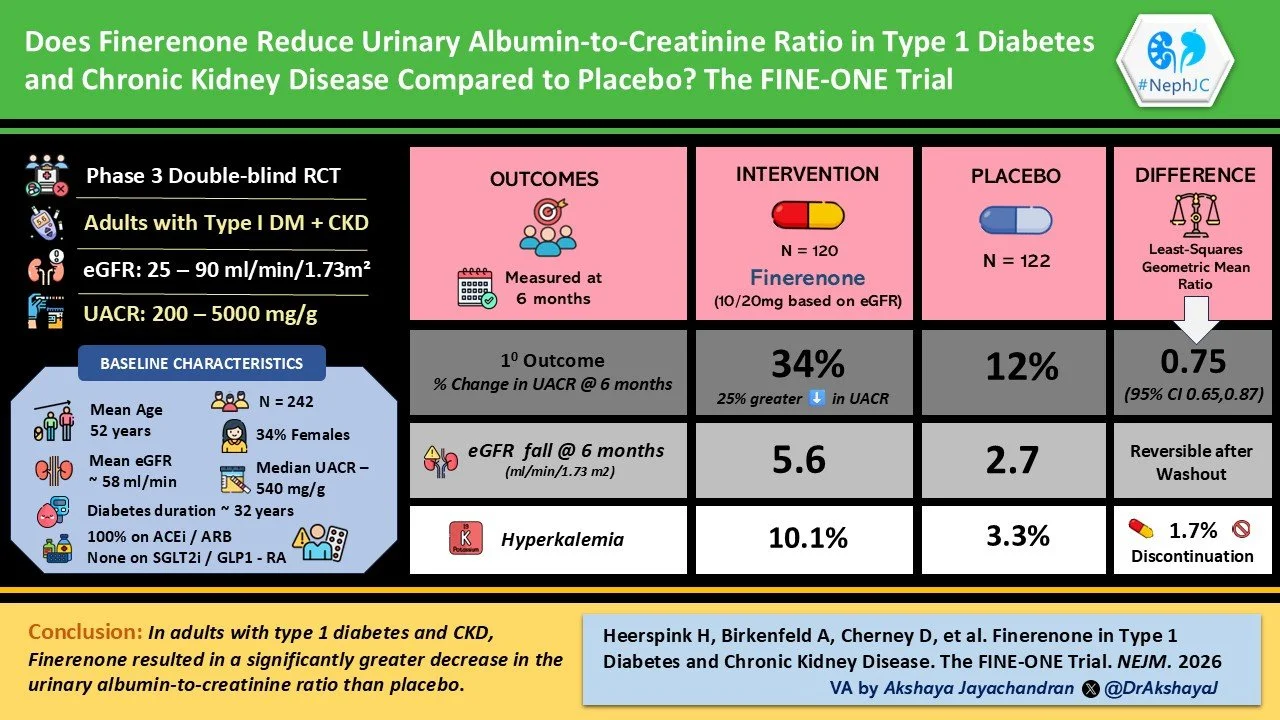
Few drugs have moved up the ranks as quickly as finerenone in treatment of diabetic kidney disease. Following the landmark FIDELIO-DKD (Bakris DL et al, NEJM 2020 |NephJC Summary), FIGARO-DKD (Pitt B et al, New Engl J Med 2021) and the FIDELITY pooled analysis (Agarwal R et al, European Heart Journal 2022), it has become one of the pillars of management of diabetic kidney disease (DKD) in type 2 DM along with RASi and SGLT2 inhibitors aka flozins. FineONE is doing the same for it in type 1 DM (Heerspink H et al, NEJM 2026 |NephJC Short) with significant antiproteinuric effects, and FINEARTS in HFpEF (NephJC summary). Can the cardiorenal benefits seen in DKD be extended to the much larger population of patients with CKD without diabetes?
Mineralocorticoid receptor overactivation not only causes fluid and sodium retention but it is also a well-recognized driver of inflammation and fibrosis, which are fundamental pathways underlying CKD progression, irrespective of the underlying cause. In a post hoc analysis of the FIDELIO-DKD, finerenone reduced albuminuria and improved kidney outcomes irrespective of baseline glycemic control or insulin use, suggesting that its kidney protective effects extend beyond glucose lowering.(Rossing P et al, Diabetes Care 2022) But a convincing biological hypothesis does not guarantee clinical benefit. Spironolactone, a steroidal MRA, improves albuminuria and hypertension, but its widespread use in CKD has been limited mostly by lack of robust evidence demonstrating improvement in clinical kidney outcomes. The hypothesis that finerenone, a highly specific, nonsteroidal antagonist of mineralocorticoid receptors (nsMRA) can improve renal outcomes in patients with CKD who do not have diabetes required prospective testing. So, let’s FIND out!
Methods
Study Design
The FIND-CKD study design (Heerspink et al, NDT 2025) was published in 2025. In this multicenter, randomized, double-blind, parallel-group, phase 3 trial, across 24 countries, investigators studied the clinical efficacy and safety of finerenone at doses of 10 mg and 20 mg daily versus placebo in slowing the progression of chronic kidney disease among participants without diabetes.
Study population
The study enrolled male and female patients older than 18 years of age with a clinical diagnosis of CKD without evidence of diabetes. The investigators chose patients with high risk of progression of CKD by eGFR and albuminuria. Accordingly, two categories of inclusion were made:
those with eGFR of ≥25 to 60 ml/min/1.73m² with low level albuminuria (UACR ≥ 200 to < 500 mg/g); total number of patients in this group was capped at 10% of total enrollment planned AND
those between eGFR ≥25 to 90 ml/min/1.73m², if the UACR was ≥ 500 to < 3500 mg/g at the time of screening
The proteinuria / albuminuria of anytime in the prior 3 months could be used, and if not done in the prior 3 months, then the pre-screening investigation could be used to identify patients. The key inclusion and exclusion criteria are shown in figure below:
Figure: Key inclusion and exclusion criteria: Heerspink HJ et al, NDT 2025
Thus those with a clear indication (eg HF or DKD) were excluded, and so were those with lupus, ANCA vasculitis or those on active immunosuppression. Patients with prior organ transplantation, recent dialysis-requiring acute kidney injury, uncontrolled blood pressure or nephrotic-range albuminuria (UACR >3500 mg/g) were also excluded.
Intervention
The protocol of Finerenone dosing and follow up is shown in the figure below. Notably, there was no run-in period unlike with the FIDELIO/FIGARO trials.
Study Protocol Figure 1-1: The study design and scheme of FIND CKD study. Heerspink HJ, et al NEJM 2026
Participants were randomly assigned in a 1:1 ratio to receive oral finerenone or matching placebo in addition to standard-of-care therapy. Participants were randomized using an interactive response technology system, with stratification according to baseline flozin use (yes vs no) and screening UACR (≤1000 vs >1000 mg/g).
Finerenone (or matching placebo) was initiated at 10 or 20 mg once daily according to baseline kidney function, with protocol-directed dose adjustments throughout follow-up. Participants receiving 10 mg were eligible for uptitration to the target dose of 20 mg after one month if serum potassium remained ≤4.8 mmol/L and eGFR had not declined by ≥30%. Hyperkalemia was managed using a predefined algorithm: treatment was temporarily withheld for serum potassium >5.5 mmol/L and restarted once potassium decreased to ≤5.0 mmol/L. The protocol allowed temporary interruption and rechallenge rather than routine permanent discontinuation. If hyperkalemia recurred despite resumption at the lower dose and no alternative cause was identified, permanent discontinuation of study treatment was recommended. Notably, the protocol did not mandate the use of potassium-binding agents as part of hyperkalemia management.
An important methodological consideration was the handling of flozins, which had rapidly emerged as foundational therapy even for non-diabetic CKD during the conduct of the trial. The investigators permitted but did not require the co-administration of flozins. For those with a clear clinical indication, the protocol preferred that these agents be started and stabilized at a fixed dose for a minimum of four weeks prior to the screening process. Flozination following randomization was also allowed if deemed necessary by the clinician, though only after the participant had maintained a steady study drug regimen for at least one month.
Outcomes
The primary efficacy outcome was the total eGFR slope, defined as the mean annual rate of change in the eGFR from baseline to month 32. To account for the expected early hemodynamic decline with finerenone, eGFR was modelled using a two-slope mixed-effects model that separated the acute (baseline to Month 3) and chronic (Month 3 onward) phases of treatment. Secondary outcomes were tested using a prespecified hierarchical strategy and included:
(i) Composite kidney or cardiovascular outcome:
Sustained ≥57% decline in eGFR (confirmed for ≥4 weeks; equivalent to doubling of serum creatinine),
Kidney failure (eGFR <15 mL/min/1.73 m² confirmed after ≥4 weeks, long-term dialysis for ≥30 days, or kidney transplantation),
Hospitalization for heart failure, or
Cardiovascular death.
(ii) Kidney-specific composite outcome:
Sustained ≥57% decline in eGFR, or
Kidney failure.
(iii) Cardiovascular composite outcome:
Hospitalization for heart failure, or
Cardiovascular death.
There were several exploratory outcomes as well as predefined safety (mostly related to hyperkalemia).
Sample size assumptions
The sample size was calculated to provide >90% power to detect a between-group difference of 0.7 mL/min/1.73 m²/year in the total eGFR slope over a 32-month period, requiring the enrollment of approximately 1,500 participants. The primary efficacy analysis followed the intention-to-treat principle and used a two-slope linear mixed-effects model to estimate the acute (baseline to Month 3) and chronic (thereafter) phases of eGFR decline. Secondary time-to-event outcomes were analyzed using stratified Cox proportional hazards models, with statistical significance assessed according to a prespecified hierarchical testing strategy to control for multiple comparisons.
Funding
FIND-CKD was funded and sponsored by Bayer. Seven co-authors were Bayer employees (clinical development, statistics, regulatory affairs, medical affairs, and related functions). Bayer co-designed the trial with the Steering Committee, performed the primary statistical analyses, and participated in manuscript submission. Analyses were independently verified by investigators at the University Medical Center Groningen, and safety oversight was provided by an independent Data Monitoring Committee.
Results
A total of 1584 participants were randomized and included in the full analysis set, indicating that nearly half of those enrolled (perhaps meaning those screened?) met the eligibility criteria.
The median treatment duration was 36.6 months. Overall, 1566 participants completed the full study, including the month 32 visit.
Figure S1. CONSORT diagram from Heerspink HJ et al, NEJM 2026
The mean age was 55 years; 35% were women, and the median UACR was 819 mg/g. The mean eGFR was 47 ± 16 mL/min/1.73 m², with approximately 80% of participants having an eGFR <60 mL/min/1.73 m². Hypertension was highly prevalent and RASi use was nearly universal (99.7% - as mandated by trial protocol) with most participants receiving an ARB, and 17% of participants were flozinated. Just over half (~ 57%) had chronic GN identified as their underlying cause of CKD.
Table 1. Demographic and clinical characteristics from Heerspink HJ et al, NEJM 2026
Primary outcome
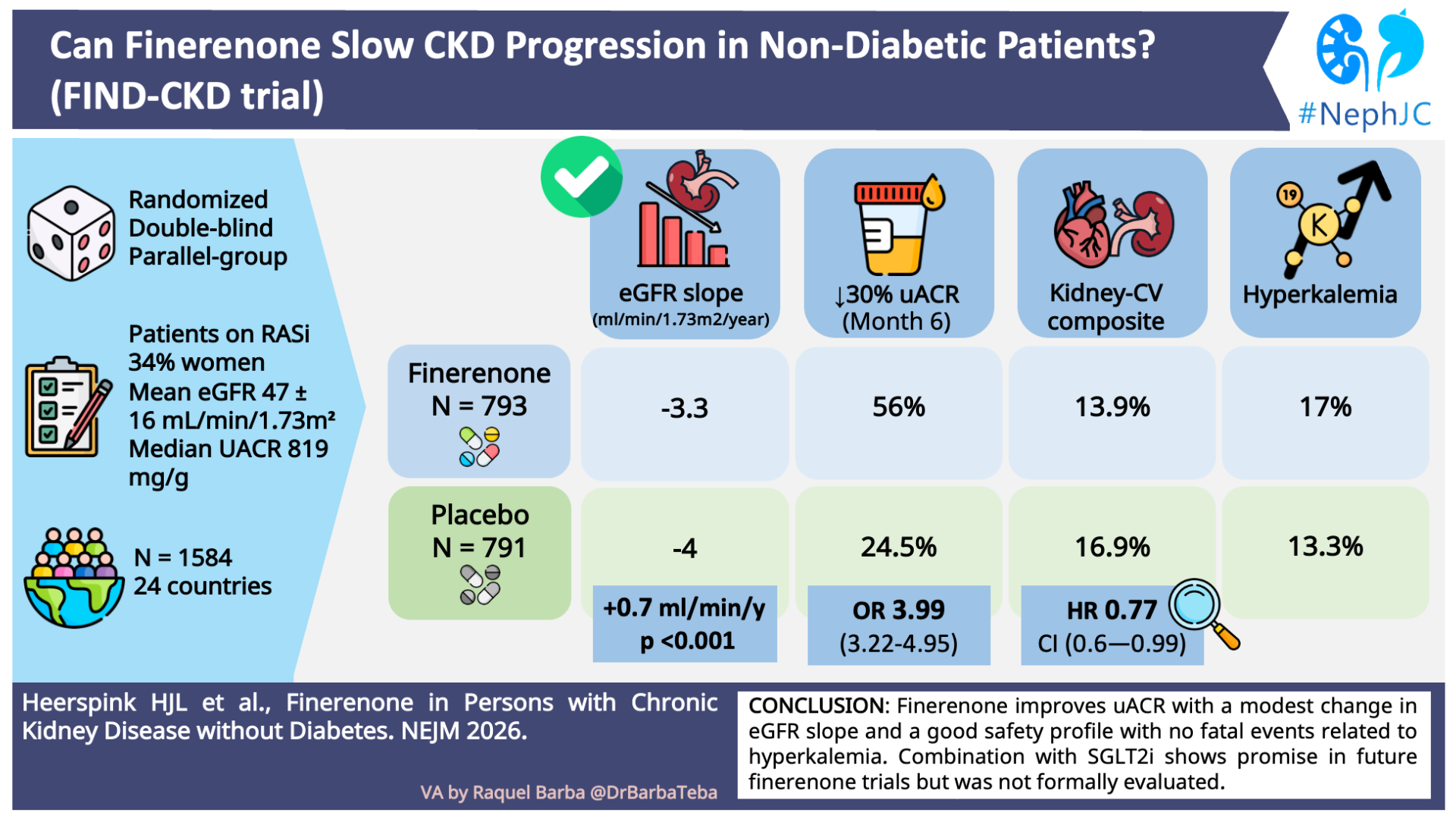
Following the early hemodynamic dip, kidney function declined more slowly with finerenone than with placebo. This treatment effect became evident after the initial 3 months and was sustained throughout follow-up. The primary outcome of total eGFR change was -3.3 vs -4 ml/min/1.73m²/year in finerenone and placebo groups respectively (CI = 0.3-1.1, p<0.001).
Figure 1A. Trajectory of eGFR from baseline to month 44 and from end of treatment visit to last follow up visit (gray box). Heerspink HJ et al, NEJM 2026
Separating the acute and chronic eGFR slopes highlighted the biphasic response to finerenone. During the first 3 months, the acute eGFR slope with finerenone was 1.2 mL/min/1.73 m²/year greater than with placebo. Notably, after treatment discontinuation (in the washout phase), eGFR increased in the finerenone group (+1.2 mL/min/1.73 m²) but continued to decline in the placebo group (−0.5 mL/min/1.73 m²), supporting the reversible nature of the initial hemodynamic dip.
Figure 1B. Mean annual eGFR slopes (overall, baseline to month 3, and month 3 to end of treatment). Confidence intervals not adjusted for multiplicity except for total eGFR slope. Heerspink HJ et al, NEJM 2026
Secondary outcomes
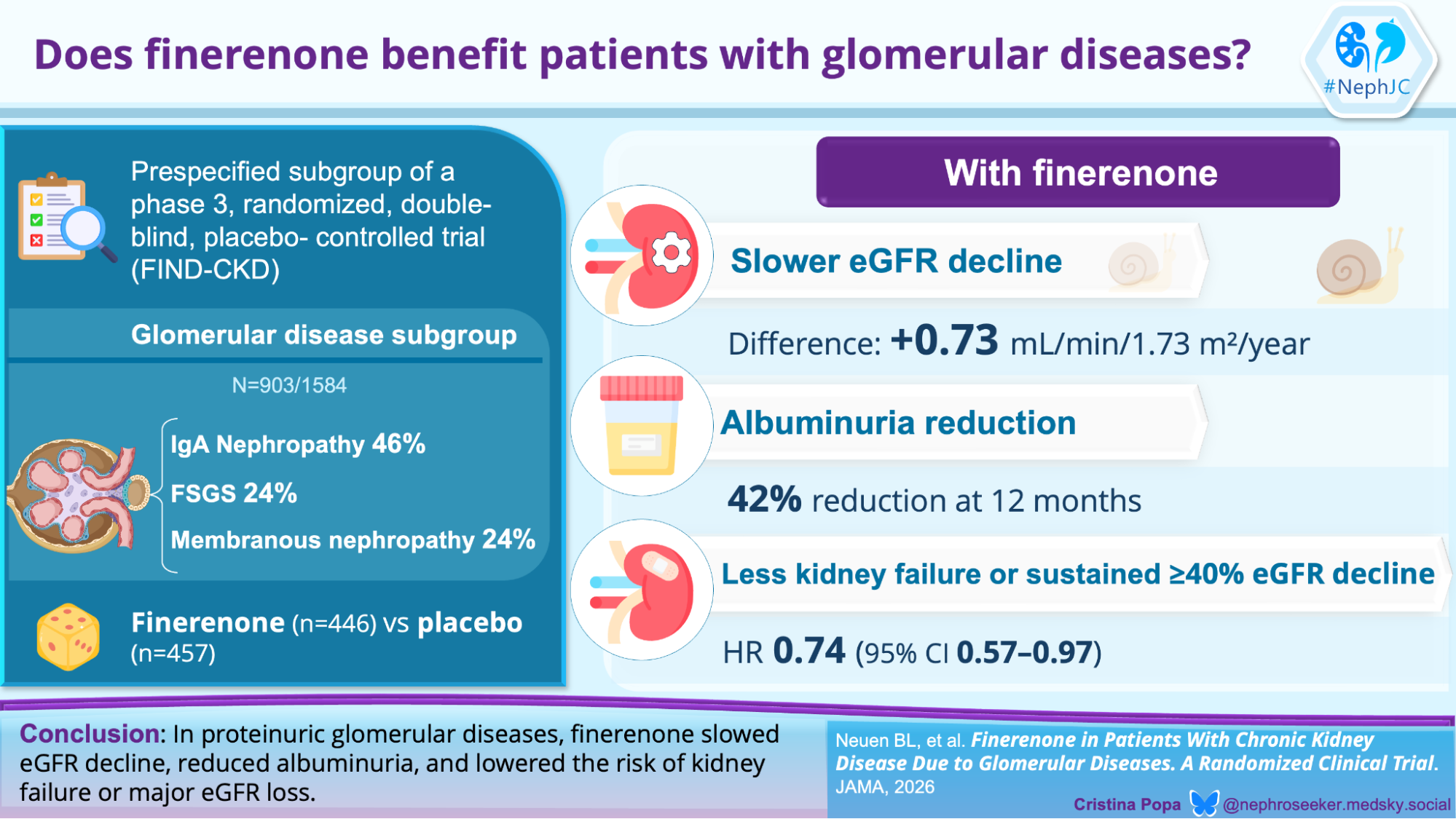
The secondary composite kidney–cardiovascular outcome (sustained ≥57% decline in eGFR, kidney failure, hospitalization for heart failure, or cardiovascular death) occurred less frequently with finerenone than with placebo (13.9% vs. 16.9%; HR 0.77, 95% CI 0.60–0.99; p=0.04). The next outcome missed the threshold for significance (see figure below for more).
Figure S5. Efficacy for components of first composite secondary outcome. Heerspink HJ et al, NEJM 2026
The treatment effect was primarily driven by kidney outcomes, whereas cardiovascular events were infrequent, with no significant reduction in hospitalization for heart failure or cardiovascular death (HR 0.60, 95% CI 0.27–1.33).
Table 2. Outcomes and Adverse Events. Heerspink HJ et al, NEJM 2026
With regard to the exploratory outcomes, finerenone was associated with a sustained reduction in albuminuria, with a 35.4% greater reduction in UACR than placebo at month 6, an effect that persisted throughout follow-up. More than half of the patients achieved a ≥30% reduction in UACR (56.0% vs. 24.4%; OR 3.99). Also, 4 weeks after treatment discontinuation, the decline in eGFR remained smaller with finerenone than with placebo (between-group difference, 2.4 mL/min/1.73 m²), supporting the reversible nature of the initial hemodynamic effect.
Figure S6. Change from baseline in uACR. Heerspink HJ et al, NEJM 2026
Subgroup analysis of annual rate of change in eGFR from baseline to month 32 showed a consistent benefit of finerenone in all subgroups.
Figure 2. Annual rate of change in eGFR according to subgroups from Heerspink HJ et al, NEJM 2026.
Safety outcome
Overall adverse events and serious adverse events were similar between groups. As expected, hyperkalemia was more frequent with finerenone (17.0% vs. 13.3%); however, serious hyperkalemia events were uncommon (1.0% vs. 0.6%), no fatal hyperkalemia events occurred, and permanent treatment discontinuation due to hyperkalemia was infrequent (1.5% vs. 0.1%).
Discussion
The FIND-CKD trial reports that the addition of finerenone in mostly proteinuric, but non-diabetic CKD, on background of RASi results in a meaningful reduction in albuminuria, and a significantly slower decline in GFR slope.
Strengths
This was properly designed, powered, blinded RCT. It included patients in whom we have little data beyond (low quality) RASi and (high quality) flozins to slow down GFR decline, and there remains a high residual risk of kidney failure. the RCT was appropriately enriched with patients who have proteinuria, and used validated outcomes (total GFR slope) while also demonstrating significant effect on UACR which is presumably in the mechanistic pathway. The risk of hyperkalemia was there, but low. Finerenone seems quite safe to use in this setting.
Limitations
The study population was not fully representative of the overall non-diabetic CKD population. Most participants were men, had significant albuminuria thus limiting the generalizability of the findings. Thus, patients with polycystic kidney disease, or others with non-proteinuric CKD were excluded. It would be harder to show an effect in these as GFR decline is slower - as also the pathophysiology may not be MR related.
Also excluded were those with lupus nephritis, ANCA-associated vasculitis, and other GNs on active immunosuppression. This is somewhat appropriate as the specific immune pathways need to be targeted rather than these non-specific supportive or palliative therapies. In GN, finerenone (possibly like flozins) might be quite useful in chronic or burnt out disease, not in the active state.
Other excluded populations include those with GFR < 25 (as is common - but also perhaps too late, or at high risk of hyperkalemia) - but there were also very few Black patients (~ 5%). APOL1 and FSGS is quite common and it would be useful to have strong data in that population.
Only 17% of participants were receiving an SGLT2 inhibitor, although flozins were allowed during the trial period. Trial enrollment took place during a transitional period (2021–2023), before flozins became widely established in patients with non-diabetic CKD. Though table S2 includes changes in BB, CCB, statins etc they exclude flozins. We would not expect differential use of flozins, needless to say, and the effect size was consistent in those on flozins and those who were not.
The relatively low number of cardiovascular events limited the statistical power to detect differences in cardiovascular outcomes. This was a patient population at much higher risk of kidney than CV outcomes.
Finally, efficacy is only part of the equation. As CKD management increasingly shifts toward a multi-drug approach combining RAS inhibitors, SGLT2 inhibitors, and finerenone, an important unanswered question is whether these therapies will be equally accessible in routine practice. FIND-CKD was not designed to address cost-effectiveness or affordability, but these factors will inevitably influence how widely FIND-CKD findings can be translated into clinical care.
How do we interpret these results?
Rather than relying on a traditional time-to-event kidney composite, FIND-CKD used total eGFR slope, an endpoint that has gained increasing acceptance as a surrogate marker of CKD progression and is accepted by FDA in DKD and non-DKD populations. This approach is supported by a meta-analysis of 66 randomized trials showing a strong association between treatment effects on eGFR slope and hard kidney outcomes, including sustained ≥57% eGFR decline and kidney failure (Inker LA et al, Nature medicine 2023).
The GFR slope is very familiar to previous trials. Despite slight differences in the definition of the acute phase (4 months in FIDELIO versus 3 months in FIND-CKD), both studies showed the same biphasic pattern: an early hemodynamic eGFR dip followed by a slower chronic decline in kidney function. In FIND-CKD, finerenone improved the total eGFR slope by 0.7 mL/min/1.73 m²/year, similar to FIDELIO. Together, these findings suggest that this characteristic eGFR trajectory is an intrinsic effect of finerenone rather than a diabetes-specific phenomenon. The overall kidney effect was still far from 'remission in CKD' however.
One of the most consistent findings across studies of finerenone is the early and sustained reduction in albuminuria. In FIDELIO-DKD (Barkis GL et al, N Engl J Med 2020) and FIGARO-DKD (Pitt B et al, N Engl J Med 2021), finerenone reduced UACR by approximately 31% and 32% versus placebo, respectively. Similarly, FIND-CKD demonstrated a 35.4% placebo-corrected reduction in UACR at 6 months, indicating a similar antiproteinuric effect regardless of diabetes status. The clinical trials of finerenone across the spectrum of CKD are shown in the table below:

Safety data was similar to what we have seen with other trials with finerenone. Hyperkalemia remained the main adverse event associated with finerenone (17.0% vs. 13.3%), but serious events were rare (1.0% vs. 0.6%), no fatal hyperkalemia occurred, and treatment discontinuation due to hyperkalemia remained uncommon (1.5%).
FIND-CKD attempted to answer one important question—but immediately raised the next one. If finerenone works in non-diabetic CKD (probably by targeting shared mechanisms of CKD progression), should we still think in terms of adding therapies one by one? Or is the future an upfront combination strategy with a flozins, similar to what is proposed in DKD? (CONFIDENCE trial, Agarwal R et al, New Engl J Med 2025 | NephJC Summary). Additionally, are we now heading into ‘GDMT’ like 4 pillars in non-DKD as well? Apart from RASi, flozins, now finerenone, we also have preliminary data from GLP1RAs on albuminuria (Apperloo et al Nat Med 2025) and GFR (Colhoun et al Nat Med 2024). To reiterate - this mostly applies to proteinuric CKD - in patients who are beyond the initial immunosuppression window. Also read the accompanying NephJC Short for discussion of the GN subgroup and INFINITY analysis.
Lastly - where does this leave spiro-stans? The authors disparagingly quote BARACK-D (Hobbs et al, Nat Med 2024 | NephJC commentary). There has also been the recent SPIRRIT-HF trial (Design: Lund et al EJHF 2025) which did not report a benefit. Though we await final publication, just like BARACK-D, most patients in this trial did not stay on spironolactone. This has been a frustrating few years in futile spironolactone trials, and it is possibly time to move on. Only the onset of ASIs may threaten to dethrone the expansion of finerenone indications across the CKM space.
Conclusion
Finerenone clearly slows progression of GFR decline in (mostly proteinuric) non-diabetic CKD, similar to effects in DKD, and is safe to use. Access and implementation will remain important barriers.
Summary by
Andreea Manolea, Nephrology resident, Clinical Hospital "Dr. C. I. Parhon" Romania
Smita Divyaveer,
Associate Professor,
Department of Nephrology,
PGIMER, Chandigarh, India
Reviewed by
Akshaya Jayachandran, Brian Rifkin, Swapnil Hiremath,
Cristina Popa, Pallavi Prasad, Milagros Flores
Header created by AI from prompts by Brian Rifkin