
#NephJC Ten POsts Chat
Tuesday, October 13 2026, 9 pm Eastern
Comparative Study BMJ. 2026 Sep 18:394:e100624. doi: 10.1136/bmj-2026-100624.
Survival benefit of deceased donor kidney transplantation versus continued dialysis: international target trial emulation
Rachel Hellemans, Nicholas C Chesnaye, Anneke Kramer, Edouard L Fu, Miha Arnol, Anders Åsberg, Claus Bistrup, Pietro Manuel Ferraro, Kristian Heldal, Jaakko Helve, Camille Legeai, James Medcalf, Dorothea Nitsch, Laia Oliveras, María José Pérez-Sáez, Belén Ponte, Emilie Savoye, Mårten Segelmark, Shaminie Shanmugaranjan, Søren S Sørensen, Roser Torra, Alberto Ortiz, Kitty J Jager, Vianda S Stel
PMID: 42759976


Introduction
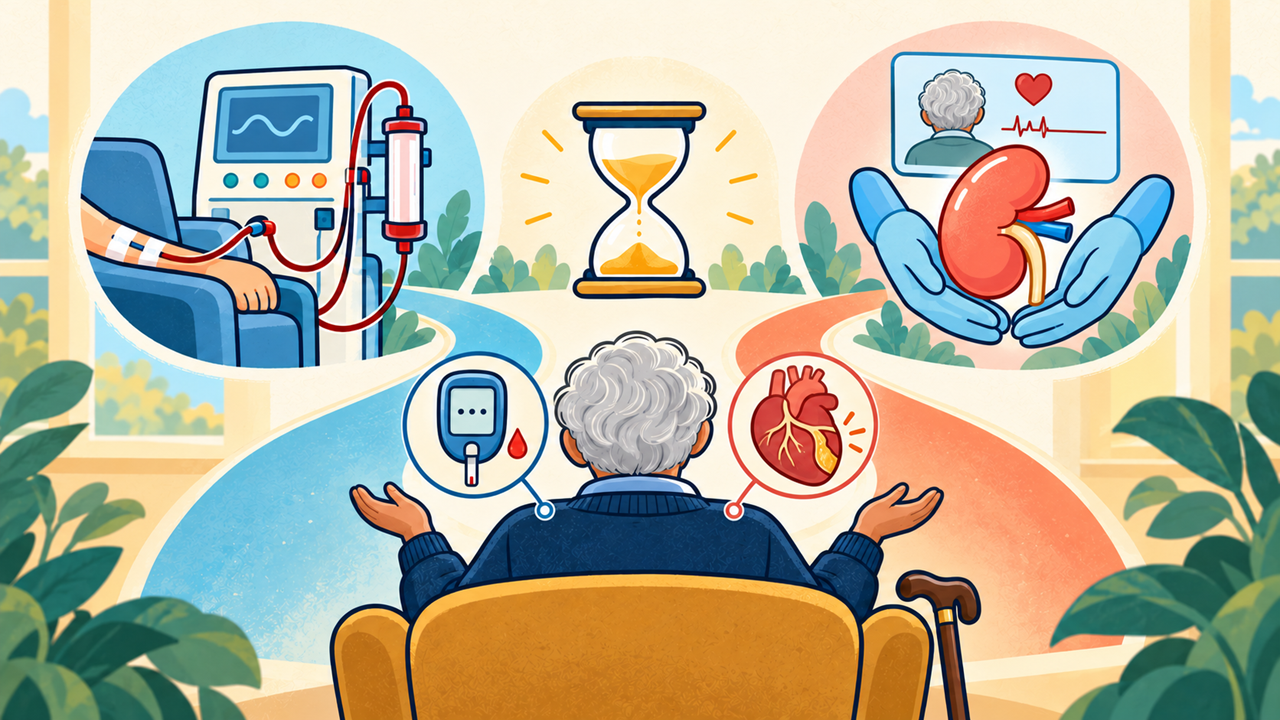
Consider a conversation at a transplant clinic. A 70-year-old patient with diabetes who is receiving dialysis has been offered a kidney from a deceased older donor. After hearing about the operation, medications, and follow-up care, the patient asks, “Will this kidney help me live longer?”
There is a lot riding on that little word “this”. The patient wants to understand the likely benefit of kidney transplantation, given their age and medical history. Individualized medical recommendations are the goal, but they are often difficult in the context of evidence based medicine, where study populations often don’t reflect the patient in front of you.
The evidence supporting transplantation, in most patients with ESRD, is substantial. A 2022 systematic review by Chaudhry et al. (BMJ 2022), with 48 observational studies (but no RCTs) and 1,245,850 patients found a long-term survival advantage associated with transplantation in 44 studies (92%). Across the 18 studies included in the meta-analysis, the pooled hazard ratio for mortality was 0.45 (95% CI 0.39–0.54). However, results varied markedly between studies (I²=95.3%), and 11 studies identified subgroups without a statistically significant benefit, implying that there could be “some subgroups that may lack a survival benefit.”
The transplant population has also been getting older. In an ERA Registry study of 99,543 first kidney transplant recipients across 12 European countries, the proportion aged 65 or older increased from 18% in 2010 to 28% in 2019. That analysis included both living and deceased donor transplantation (Boenink et al, NDT 2023). The donor population was changing as well: among 24,177 deceased donor transplants in seven European countries or regions, the median donor age increased from 50 to 55 years between 2005 and 2015, while at the same time the proportion involving donation after circulatory death increased from 19% to 37%. These trends make the combination of recipient characteristics and donor characteristics increasingly relevant to the survival discussion (Pippias et al., NDT 2021).
Dialysis outcomes have also improved in recent years. In DOPPS, international data covering 1999–2015, adjusted modelled survival time increased by 13% per decade in four European countries, 12% in Japan, and 47% in the United States. These estimates suggest that hemodialysis patients were living longer than those treated in earlier eras, reinforcing the need to revisit transplant-versus-dialysis comparisons based on older data (McCullough et al., AJKD 2025). However, these advantages don’t necessarily extend to the extreme elderly. Another recent study showed that in patients 75 years and older, on average, only lived an additional 77 days versus those who chose conservative (non-dialysis) management of advanced kidney disease (Chou et al, Kidney Med, 2022).
There remains uncertainty about the size and timing of the benefit for particular recipient-donor combinations. How does the comparison change with advancing age, diabetes, cardiovascular disease, donor quality, and donation after brain versus circulatory death? Answering these questions needs thoughtful study design. Patients have to survive long enough to receive a transplant; an analysis that mistakenly credits their earlier dialysis survival to transplantation can introduce immortal time bias. Target trial emulation helps address this problem by first specifying the hypothetical randomised trial and then aligning eligibility, treatment assignment, and follow-up in the observational data. In this way, it applies the logic of a clinical trial to registry research, while still depending on how completely the available data captures clinically important differences between patients (Hernán and Robins, American Journal of Epidemiology, 2016; Fu et al., BMJ 2026).
In a sea of data supporting the survival benefits of kidney transplantation, clinicians still need clearer directions when navigating decisions for higher-risk patients. Hellemans and colleagues, using international registry data, set out to address that uncertainty by examining recipient age, comorbidities, and donor characteristics together. Their question was specific: for a patient with a specific risk profile, receiving a specific type of donor kidney, how much survival benefit could transplantation offer compared with continuing dialysis?
The Study
Methods
Data collection
The study used donor and transplant-related data from the European Renal Association (ERA) Registry, comprising five national registries: Catalonia (Spain), Denmark, France, Norway, and England/Wales/Northern Ireland (UK).
Recipient variables were: age, sex, cause of kidney failure, dates of waitlisting, dialysis initiation, kidney transplantation, and date and cause of death.
Diabetes was defined as diabetes either as a primary renal disease or as a comorbidity. Cardiovascular disease was defined as a history of ischaemic heart disease, peripheral vascular disease, or cerebrovascular disease. Both were recorded at waitlisting only. Donors were classified as expanded criteria donors (ECD) if aged ≥60 years, or 50–59 years with at least two of the following: arterial hypertension, cerebrovascular cause of death, or pre-retrieval serum creatinine >1.5 mg/dL before retrieval. All others were standard criteria donors (SCD).
The retrieval type was donation after brain death (DBD) or donation after circulatory death (DCD). Variables required to calculate the Kidney Donor Risk Index (KDRI) were collected. KDRI refers to the relative risk of kidney graft failure for a specific donor compared to the median (average) donor. Calculation includes age, height, weight, hypertension and diabetes history. Denmark and Norway were excluded from all DCD analyses because DCD transplants were absent or rare.
Target trial specification and emulation
Target trial emulation applies the design of a randomized trial to observational data. The investigators first write the protocol of the trial they would ideally conduct, then reproduce each element of it with registry data (Hernán and Robins, Am J Epidemiol, 2016; Fu et al, BMJ, 2026). The ideal trial here would randomize waitlisted patients on dialysis. Each time a kidney became available the authors would then compare survival depending upon whether the patient proceeded to transplantation or continued dialysis. The table below sets the target trial against its emulation; each row in which the two differ is a potential source of bias.
Protocol of the hypothetical target trial and its emulation using data from the European Renal Association (ERA) Registry, Adapted from Supplementary Table S1 - Hellemans et al, BMJ 2026
The question. Among patients who have spent the same time on waitlists while on dialysis, does receiving a deceased donor kidney this month, rather than remaining on dialysis, change survival?
Step 1- entry. Patients enter the dataset when they are both waitlisted and receiving dialysis. Time is counted in months from that point.
Step 2- one trial per month. For each of the 60 months after waitlisting, a new trial is started among patients still eligible: alive, waitlisted, on dialysis, and not yet transplanted. Patients were transplanted during that month from the transplant arm; all other eligible patients form the continued dialysis arm. A patient re-enters every monthly trial until transplantation, death, or censoring. A patient transplanted in month 11 therefore contributed ten observations to the dialysis arm (months 1-10) and one to the transplant arm. The 60 trials were then pooled for analysis; the 64,036 patients generated 1,491,537 person-trials.
Step 3- a common time zero. In each trial, eligibility is assessed, treatment is assigned, and follow-up starts at the same moment. This prevents three time-related biases that affect conventional comparison of transplanted and non-transplanted patients and gives a fourth property:
No immortality bias. If follow-up started at waitlisting and patients were classified by eventual transplantation, the wait would be counted as a transplant follow-up, although a patient cannot die during it and still be counted as a recipient. With a median wait of 441 days (IQR 181-853), recipients are not credited with the survival they accrued while waiting.
No lead time bias. If the arms started follow-up at different points in the disease course, survival would differ for that reason alone. In the emulation, both arms start at the same point after waitlisting.
No depletion-of-susceptible bias. Recipients are, by definition, survivors of the wait, whereas the frailest candidates die early on dialysis. In the emulation, only patients alive at month X are compared, so both arms have survived equally long.
Exact matching on waiting time. Patients in the two arms have identical time on the waiting list.
The design does not address unmeasured confounding due to the fact that healthier candidates remain more likely to be transplanted.
Step 4- emulating randomization. Assignment was not random. Receipt of a kidney depends on allocation rules, blood group, sensitization, and clinical judgment. Treatment was therefore taken as observed (“pseudo-randomization”), and differences in measured baseline characteristics between arms were removed by weighting. Differences in unmeasured characteristics, such as frailty, are not removed.
Step 5- one emulation per recipient-donor combination. The whole procedure was repeated for each of four donor categories (SCD/DBD, SCD/DCD, ECD/DBD, ECD/DCD) in each of four patient groups (all patients; diabetes; CVD; neither), giving (four by four) 16 separate target trials. Each compares recipients of one donor category with dialysis patients from the same patient group. Because each trial has its own comparator, results cannot be compared directly between donor categories. Further emulation stratified donors by KDRI and by donor age.
Reporting. The study followed the Transparent Reporting of Observational Studies Emulating a Target Trial (TARGET) guideline.
Supplemental Figure S2. Causal directed acyclic graph (DAG) showing the effect of treatment strategies on patient survival in waitlisted maintenance dialysis patients. This does not show time-varying processes like varying health status, frailty, temporary waitlist inactivation, donor availability, and allocation decisions that could affect treatment assignment, censoring, and survival. Controlling for C eliminates the confounding due to D. Hellemans et al, BMJ 2026
Study Population
Inclusion Criteria:
Adults ≥20 years
Receiving dialysis and waitlisted for a first deceased donor kidney-only transplant between 1 January 2000 and 31 December 2019.
Exclusion Criteria:
Preemptive kidney transplant
On the waiting list for more than 10 years without receiving a kidney transplant
Started dialysis more than 10 years before waitlisting
Permanently delisted
Missing diabetes data
For the analyses stratified by cardiovascular disease status, patients with missing data on cardiovascular disease.
Treatment strategies and treatment assignment
Transplantation was a point treatment strategy, a one-time intervention, with the transplant received at the start of that monthly trial. Continued dialysis was a sustained treatment strategy, requiring the patients to be on dialysis at the start of the trial and remain on it throughout follow-up.
This setup was an observational analogue of a per-protocol comparison, estimating the survival outcomes associated with transplant, including perioperative and early post-transplant risks, while isolating the effect of continued dialysis in the comparison arm.
Follow-up
Follow-up started at treatment assignment and ended at death, recovery of kidney function, or loss to follow-up, or administrative censoring, whichever occurred first. Administrative censoring occurred 5 years after waitlisting (dialysis arm) or 5 years after transplantation (transplant arm), and in all patients on December 31, 2019.
The two groups were handled differently if the treatment changed. In the transplant group, patients remained under follow-up even if their graft later failed and they returned to dialysis, fitting the point treatment strategy. In the dialysis group, patients were censored if they received a deceased or living donor transplant, as continuing dialysis was a sustained treatment strategy.
Supplemental Figure S1. Flowchart outlining the two study cohorts, one for the analysis for all patients (A) and patients with diabetes (B) (figure 2A and 2B) and the other one for the analysis for patients with cardiovascular disease (C) and patients without diabetes and cardiovascular disease (D) (figure 2C and 2D). Hellemans et al, BMJ 2026
Statistical Analysis
Matching. Because a new trial started each month, transplanted patients were compared with patients who had spent the same time on the waiting list while on dialysis, giving exact matching on waiting time at assignment.
Confounding. Inverse probability of treatment weights (IPTW) were estimated by logistic regression of treatment on age at trial start, sex, primary renal disease, calendar year of waitlisting, time on dialysis before waitlisting, diabetes, and country. Continuous variables were modeled with restricted cubic splines. Covariate balance before and after weighting was assessed with absolute standardized mean differences, with 0.1 as the threshold for acceptable balance. CVD was not included in the main models; a sensitivity analysis added it in patients with available data.
Informative censoring. Censoring of dialysis patients at transplantation may be informative, because transplantation depends on health status. Inverse probability of censoring weights (IPCW) were estimated by logistic regression of censoring on the same baseline covariates.
Weights. IPTW and IPCW were stabilized using the marginal probabilities of transplant or censoring, multiplied into a single weight, and truncated at the 99th centile to limit the influence of extreme values.
Survival model. A weighted flexible parametric (Royston-Parmar) survival model was fitted, with a restricted cubic spline for the baseline hazard and time-varying coefficient for treatment, allowing the hazard ratio to change over follow-up and capture early post-transplant mortality. Age at trial start was also modelled with a restricted cubic spline and an age x treatment interaction, allowing the treatment effect to vary non-linearly with age. The model yielded marginal 5-year survival probabilities, time-varying hazard ratios, and restricted mean survival time (RMST) at 5 years, the mean time alive during the first 5 years. Results are reported at 5-year age intervals. Confidence intervals for all survival estimates were based on the 2.5th and 97.5th centiles from the distribution of 1000 parametric bootstrap resamples.
Subgroup analyses were restricted to adults aged 40 or older because there were relatively few younger transplant recipients.
Sensitivity analyses. Crude (unweighted) analyses of waitlisting in 2000-2009 vs 2010-2019 (pre-2010 DCD analyses include UK patients only); men vs women; patients with both diabetes and CVD; and waitlist duration up to 1, 1-2, and 2-5 years; additional adjustment for CVD.
Results
Baseline Demographics:
Of the 64,036 patients included in the trial (mean age 55, with 64.1% male), most of the participants were from the UK and France, with the leading causes of renal failure being glomerulonephritis (20.9%) and diabetes (18.3%).
Table 1: Baseline characteristics of 64,036 patients at the start of the trial, Hellemans et al, BMJ 2026
Within 5 years, 61.3% received a deceased-donor kidney transplant after a median waiting period of 441 days: SCD/DBD 43.1%, SCD/DCD 11%, ECD/DBD 37.7%, ECD/DCD 8.2%. Most elderly recipients received ECD transplants; among the 1580 recipients ≥75 years, 1264 received ECD/DBD, 184 ECD/DCD, and 132 SCD kidneys; the median KDRI was 2.6 (Tables S5, S7).
Adapted from Table S8 & Figure S7: Estimates at age 75 years, all patients, adjusted. Estimates are adjusted at recipient age 75 years—0.74 in the article text; 0.76 in Table S8 and Fig S7.
Transplantation was associated with a survival advantage across many recipient ages and donor categories, but the picture became less certain in some older patient groups.
SCD/DBD
Standard criteria donor kidney transplantation was associated with a significant five-year survival benefit over the dialysis across all recipient ages. Even at the age 75, transplantation significantly reduced mortality risk (HR 0.68; 95% CI 0.59–0.79). This benefit persisted among recipients with diabetes (HR 0.58; 95% CI 0.39–0.85). In patients with cardiovascular disease, a similar trend was observed towards the benefit, though the hazard ratio did not reach statistical significance (HR 0.71; 95% CI 0.47–1.06)
Figure 2. Five-year adjusted patient survival probability at each age for deceased donor kidney transplant recipients and dialysis patients, stratified by donor quality (standard criteria donor or expanded criteria donor) and donor retrieval type (donation after brain death or donation after circulatory death) in all patients Hellemans et al, BMJ 2026
SCD/DCD
Standard criteria donor kidney transplantation after circulatory death was associated with improved survival over continued dialysis across recipient ages. At age 75, mortality was 39% lower (HR 0.61, 95% CI 0.44–0.84), and five-year survival probability was 17% higher (95% CI 10%–23%): 70% (95% CI 64%–76%) versus 53% (95% CI 53%–54%). Results for recipients aged 75 with diabetes (HR 0.69, 95% CI 0.31–1.40) or cardiovascular disease (HR 0.75, 95% CI 0.34–1.75), point estimates suggested a survival benefit, but the findings were inconclusive because of small subgroup numbers (n=45) and confidence intervals that crossed the null value of 1.
ECD/DBD
Expanded criteria donor kidney transplantation after brain death was associated with improved survival over continued dialysis, although the benefit decreased and statistical uncertainty increased with age. At age 75, mortality was 26% lower (HR 0.74, 95% CI 0.66–0.86), and five-year survival probability was 12% higher (95% CI 9%–15%): 66% (95% CI 63%–68%) versus 53% (95% CI 53%–54%). The benefit remained significant in recipients with diabetes (HR 0.70, 95% CI 0.55–0.86), but was inconclusive in those with cardiovascular disease (HR 0.82, 95% CI 0.65–1.03), where CI crossed 1.
ECD/DCD
For expanded criteria donor kidney transplantation after circulatory death, the survival benefit declined more sharply, and statistical uncertainty increased with age. At age 75, five-year survival did not differ significantly from that with continued dialysis: 59% (95% CI 51%–66%) versus 55% (95% CI 54%–55%). The mortality estimate was close to the null value of 1 (HR 0.97, 95% CI 0.70–1.33). These findings were consistent across diabetes and cardiovascular disease subgroups.
Older candidates with cardiovascular disease, therefore, emerge as a group in whom the survival advantage warrants particularly careful interpretation. These estimates do not demonstrate consistently poor transplant outcomes; several point estimates favour transplantation, while their confidence intervals remain compatible with both benefit and harm. Therefore, any survival advantage depends on the recipient’s clinical profile and the donor kidney being considered.
Donor Age
The transplant survival benefit decreased with advancing donor age across all recipient categories, with transplant and dialysis survival curves converging for donor ages above 70 years overall and from 60 years among recipients with cardiovascular disease.
Adapted from Table S8: Adjusted mortality hazard ratios (95% CI) at age 75 years, all patients, across the 4 recipient categories - Overall, DM, CVD and Neither DM/CVD
Paradox: Risk vs Gain- The Early Post-Transplant Mortality
During the first months after transplantation, mortality risk was higher than with continued dialysis, particularly in older recipients and those receiving expanded criteria donor kidneys. At age 75, peak early post-transplant mortality hazard ratios, derived from modelled curves, were 2.0 for SCD/DBD, 1.7 for SCD/DCD, 2.1 for ECD/DBD, and 3.0 for ECD/DCD.
Time gained: months of life gained within 5 years (RMST)
At age 75, compared with continued dialysis, the adjusted average survival time gained over five years was 2.7 months (95% CI 1.6–3.8) for standard criteria donors after brain death, 4.1 months (95% CI 1.7–6.0) for standard criteria donors after circulatory death, and 1.8 months (95% CI 0.8–2.8) for expanded criteria donors after brain death. Expanded-criteria donors after circulatory death showed no clear advantage (−1.4 months; 95% CI, −4.4 to 1.2).
KDRI
The transplant survival benefit decreased, and became non-significant in the oldest recipients, with kidneys in the highest KDRI quintile; in all patients, the HR at recipient age was 0.76 (0.55-1.04) for the fourth of five quintiles (Fig S4). In patients with CVD, no KDRI fifth quintile reached significance at age 75; HRs rose from 0.63 (0.33-1.14) in the lowest to 0.97 (0.63-2.45) in the highest fifth. With donors aged ≥ 70, the HR was 0.81 (0.66-0.99) at recipient age 75 and 1.13 (0.82-1.57) at 80; in patients with diabetes, HRs at 75 ranged from 0.61 to 0.84 across donor age groups, without a consistent trend (Fig S5, Table S12).
Sensitivity analyses
Findings were consistent across transplant periods (2000–09 versus 2010–19) and largely comparable between men and women. Longer waitlist duration was associated with a modestly greater transplant survival benefit, which could potentially reflect poorer survival on dialysis. Adjustment for cardiovascular disease had little effect on the results.
Discussion
Deceased donor kidney transplantation (DDKT) generally is associated with survival advantage over dialysis in the majority of clinical scenarios, but the trial reveals a critical gradient, the benefit diminishes as the donor quality declines and recipient age increases. Standard criteria donor transplantation, including either brain death or circulatory death, consistently confers a 5-year survival benefit across all age groups; for SCD/DCD kidneys in the oldest patients with diabetes or CVD, estimates were imprecise because such transplants were rare. Conversely, the survival advantage of expanded criteria donor declines progressively with advancing recipient age, most steeply for ECD/DCD kidneys.
The over-75 tail
Loss of benefit follows a combination of recipient age, cardiovascular disease, and donor quality, not an age threshold. At 75, no benefit could be shown for ECD/DCD kidneys (HR 0.97, 0.70-1.33), for ECD/DBD kidneys in CVD (0.82, 0.65-1.03), or for any KDRI fifth in patients with CVD. With donors aged 70 or older, the benefit seen at recipient age 75 (0.81, 0.66-0.99) was absent at 80 (1.13, 0.82-1.57). The ECD/DCD interval is compatible with 30% lower or 33% higher mortality: it shows no detectable benefit, no absence of benefit.
These tail estimates are hypothesis-generating. Recipients aged 75 or older made up 4% of transplants (1,580 of 39,244); only 184 received ECD/DCD kidneys, with about ten deaths in each comorbidity subgroup, so homogeneity across subgroups is not demonstrated. Estimates at 75-85 years come from an age spline that borrows information from younger recipients. Selection is strongest at these ages and acts through unrecorded factors such as frailty, which doubles post-transplant mortality (McAdams-DeMarco MA et al, Am J Transplant, 2015). The ECD/DBD estimate at 75, based on 1,264 recipients, is more robust (HR 0.74, 0.66-0.86).
Early mortality explains why gains in time are small. Peak early hazards at 75 were 1.7 to 3 times those on dialysis (Fig S7), so a 15-point gain in 5-year survival with SCD/DBD kidneys equals 2.7 months of life. With 5-year dialysis survival of 54% at 75, the 5-year window covers much of the remaining life expectancy: differences of -1.4 to + 4.1 months are close to the whole survival effect. Outcomes that matter more at this age, such as hospital admissions, infections, functional decline, time at home and quality of life, were not measured.
Comparison with other studies
This is the largest trial emulation of the question. Earlier emulation from France (7-month gain in life expectancy at 10 years; Lenain R et al, Epidemiology, 2021), Austria (benefit at all ages; Strohmaier S et al, JAMA Netw Open, 2022), and the US (5-year benefit at ≥ 75 years; Leeaphorn N et al, AJKD, 2026) did not stratify by donor quality. An Australian study found a 10-month gain over 10 years with the lowest-quality 10% of kidneys in patients aged ≥60, but pooled all older patients (Zhu L et al, JAMA Intern Med, 2025). Gill et al. found long-term benefit even with ECD kidneys in 25,468 US candidates aged over 65 years, but measured benefit from listing and could not separate DCD donors (Gill JS et al, Am J Transplant, 2013). Studies that ignored immortal time overestimated the benefit (Chaudhry et al, BMJ, 2022).
Strengths
The major strength is that this was a multinational study including a vast dataset of 64000 patients over 5 European registries. The design removes immortal time, lead time, and depletion-of-susceptibles bias and matches arms exactly on waiting time. Results are stratified by single year of age, comorbidity, donor quality, and retrieval type. Reporting follows TARGET, and the code is public.
Limitations acknowledged by the authors
Confounders were measured at baseline only; frailty, temporary inactivation, hospital admissions, and evolving CV risk were not captured, and residual confounding probably overestimates benefit. Temporary delisting was not accounted for. Donor categories are coarse, and HLA sensitisation, preservation techniques, and immunosuppression were unavailable. Some combinations were rare. Follow-up was limited to 5 years without multistate modelling. Results may vary by period, region, and centre, and apply only to waitlisted patients. Donor types cannot be compared with each other, because each has its own comparator.
Critical appraisal
First, the contrast in outcomes is measured in transplantation versus never being transplanted (Table S1). The editorial describes it as accepting an organ at a decision point (Kaewput and Patel, BMJ, 2026), but declining an offer to wait for a better one. This scenario describes a completely different strategy, estimated by neither (Husain SA et al, JAMA Netw Open, 2019| Jay CL et al, Transplantation, 2017).
Second, confounding was incompletely controlled. After weighting, age and country remained imbalanced in several subgroups, and transplant-arm weights reached 21.7-34/7 before truncation (Fig. S3). DCD transplants were 82-87% British (Table S4A), so the DBD-DCD contrast partly reflects countries. CVD, missing 19.5%, was not in the main models. An unmeasured confounder with a risk ratio of about 1.5-1.6 could explain the lower confidence limits of the SCD and ECD/DBD benefits (E-values; reviewers’ calculation, VanderWeele TJ, Ding P, Ann Intern Med, 2017). For marginal kidneys, bias could also run against transplantation if they are offered to candidates with a poor waitlist prognosis.
Third, the “threefold” early risk is the peak of a modelled curve without a confidence interval. Several hundred interval estimates are reported, and variance estimation across 1.49 million correlated person-trials is not described.
Fourth, the supplement contains errors. The table S11 repeats the fourth KDRI fifth as the fifth, the ECD/DBD HR is 0.74 in the text and 0.76 in table S8, and the methods and legends name different calendar-year confounders.
Overall, the direction and gradient of the findings are credible; the ECD/DCD result at ≥ 75 years should be reported as uncertain.
Implications for practice
Older candidates do receive deceased donor kidneys: all 1580 recipients aged ≥ 75 years here are considered “old”, and the Eurotransplant Senior Program allocates kidneys from donors ≥ 65 to recipients ≥ 65 (Frei U et al, Am J Transplant, 2008). But longevity matching keeps the best kidneys from them: only 132 (8.4%) recipients aged ≥ 75 received SCD kidneys. In the US, about half of candidates aged ≥ 70 were projected to die before receiving a deceased donor kidney (Schold JD et al, CJASN, 2009). The realistic choice is a living donor kidney, with outcomes comparable to or better than SCD transplantation (Patel K et al, Transpl Int, 2024| Toapanta N et al, Transpl Int, 2024), or a lower-quality deceased donor kidney versus continued waiting (Jay CL et al, Transplantation, 2017| Wey A et al, Am J Transplant, 2018). Age alone should not decide eligibility, as chronologic age and physiologic age can vary significantly (Kaewput and Patel, BMJ, 2026| Chadban SJ et al, Transplantation, 2020).
For the 75-year-old with diabetes offered an ECD/DCD kidney: mortality is higher in the first months, and 5-year survival is similar to dialysis, with uncertainty in both directions. A better deceased donor kidney or a living donor kidney offers a clearer benefit. Finally, quality of life, which improves after transplantation even in older recipients (Tsarpali V et al, Kidney Med, 2021| deBoer SE et al, Transpl Int, 2024) but wasn’t measured here, should carry substantial weight and merit significant discussion.
Conclusion
Deceased donor kidney transplantation was associated with a survival benefit compared with continued dialysis in most settings. However, the survival benefit associated with ECD transplantation decreased with advancing recipient age; for ECD/DCD kidneys at 75 or older it could not be demonstrated, and the estimate is imprecise. Where survival gain is small or uncertain, the decision rests on the patient’s priorities.
Summary by
Associate Consultant (Nephrology),
Max Superspeciality Hospital,Noida,India
Assistant Professor (Nephrology)
Christian Medical College,Vellore,India
Reviewed by
Cristina Popa, Brian Rifkin, Akshaya Jayachandran
Header Image created by AI, based on prompts by Akshaya J