


This week, we will discuss the use of LLMs for the diagnosis of complex nephrology cases. Can AI help nephrologists nail the correct diagnosis?
Too sweet to be true? Prophylactic SGLT2 inhibitors before cardiac surgery
MERCURI-2 reports that dapagliflozin cuts postoperative AKI after cardiac surgery, but the headline result is mostly a urine-output story, not a creatinine one. That matters: urine output after surgery is easily swayed by anesthesia, fluid shifts, vasopressors, and a diuretic drug in the mix. Until dapagliflozin shows it protects kidney function, not just urine output.
Credit Where Credit is Due
NephJC Book Club 2026: As Long As The Lemon Trees Grow
The NephJC Summer Book Club is back, did you miss us?
Every summer at the NephJC world headquarters we like to slow down and read something a bit longer than a scientific manuscript. And every summer it is the least attended chat of the year.
We’re exploring another fiction title this time. Since the world is currently facing multiple conflicts, we’d like to take you inside one individual’s vision of that dystopia, from the eyes of a young woman who is one of the last remaining medically trained people in her small town. In a world filled with sorrow and sourness can people still find moments of beauty and hope?
As Long as the Lemon Trees Grow by Zoulfa Katouh is a coming of age story set on the background of the Syrian War. Salama once expected to study pharmacy and live an ordinary life. The revolution destroys that future: her mother dies, her father and brother are arrested, and Salama begins treating wounded civilians at an understaffed hospital despite having little practical medical training.
Salama observes, "Death is an excellent teacher."
At home, Salama cares for Layla, her pregnant sister-in-law and closest friend. Salama, however, fears that staying will lead to more death and secretly tries to arrange passage out of Syria. Salama also has visions of Khawf, whose name means fear in Arabic. He pressures her to flee and creates frightening scenarios that intensify her anxiety.
Her life changes when she meets Kenan, a young man committed to documenting the revolution. Kenan films what is happening so the outside world cannot deny the suffering he witnesses firsthand. Through him, Salama rediscovers tenderness, humor, and the possibility of a future.
#NephJC Discussion 9/15/26, Tuesday 9pm EST on Twitter
The book explores many themes that make us human: trauma and survivor’s guilt, home, faith, love as resistance and storytelling. Death around every corner is also another element of this story that draws the reader into the narrator’s sense of urgency and helplessness. The pacing and storytelling emphasize that war is hell, and every day is precious and could be the last. Most importantly, the novel contrasts between living and merely surviving: the possibility of death should not eliminate human connection.
The reader is also invited to question, if your home was being destroyed, would you stay and help or leave and fight another day?
"No one takes to a rickety boat on the sea if there is another choice."
There are twists and turns that cannot be anticipated and may make you audibly gasp. The message is clear: war is terrible, but we should not look away, survivors’ stories need to be told. Often those of us who are far removed from these battlefields cannot comprehend what is taking place on the ground in the ongoing conflicts. This novel help to put a face on those horrors and explores the empathy of the reader for situations that are entirely out of one’s control. As Long as the Lemon Trees Grow is a compelling and emotionally resonant novel that combines historical context, personal struggle, and literary artistry. The narrative also emphasizes loyalty, love, and moral dilemmas, showing how ordinary people navigate extraordinary circumstances.
-Brian Rifkin
Buffering without benefit? The SODa-BIC study
Beyond Diabetic Kidney Disease: FIND-ing Finerenone's Next Role
FIND-CKD extends finerenone beyond diabetic kidney disease, showing slower eGFR decline and sustained albuminuria reduction in non-diabetic CKD. While the benefits are modest and cardiovascular effects remain uncertain, the trial opens the door to broader use of nsMRAs and raises important questions about combination therapy with SGLT2 inhibitors.
On the right TRACK? Rivaroxaban to prevent cardiovascular events in advanced CKD.
Heir to the Throne? Obinutuzumab in the membranous nephropathy MAJESTY trial
Is all kidney disease in Diabetics "Diabetic Nephropathy"?
Making an IMPACT on BP: Why pills alone won't win the war
This week we will discuss whether a bundled, team-based hypertension intervention- featuring intensive BP targets, home monitoring, health coaching, and audit feedback- can overcome poverty, clinical inertia, and fragmented care to improve blood pressure control in low-income patients receiving care at federally qualified health centers.
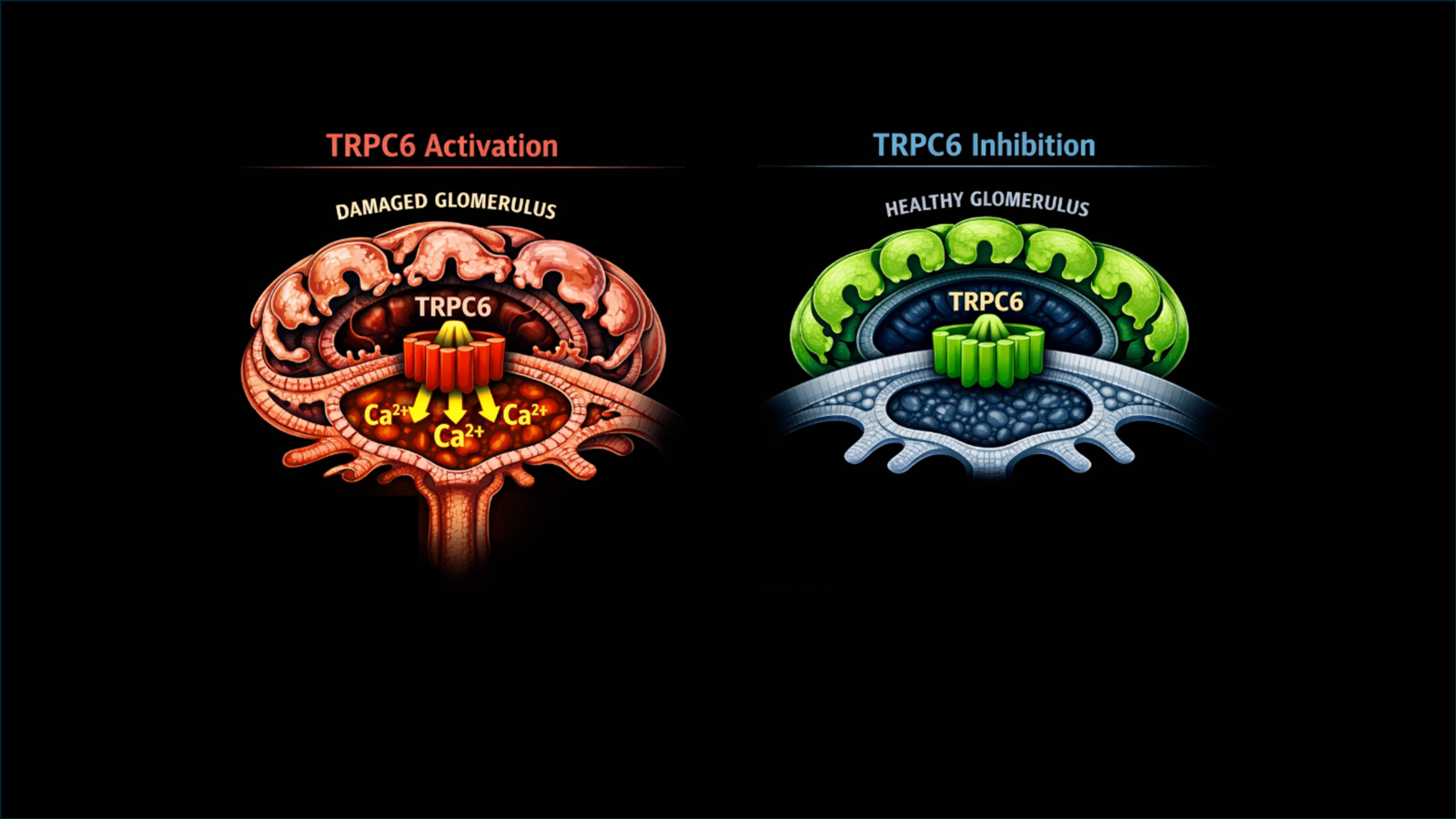
Is TRPC6 inhibition for FSGS a trick or a treat?
This week, we will discuss a phase 2 trial of the TRPC6 inhibitor BI 764198 in FSGS—an early signal for a podocyte-targeted therapy showing proteinuria reduction but set against small numbers, heterogeneity, and methodological trade-offs that frame this as direction-finding rather than definitive evidence.
Why-dralazine?! Population risk of drug induced vasculitis
This week, we will discuss why a large registry cohort was needed to move past decades of scattered case reports and clarify the true risk of hydralazine‑associated vasculitis. When rare events hide in noise, only scale can reveal the signal. Can population‑level data finally bring this paradox into focus?