


Once again we have two curated archives of the discussion. Joel Topf just published his version for NephJC:
And Tejas of Nephrology On-Demand once again published his curation:
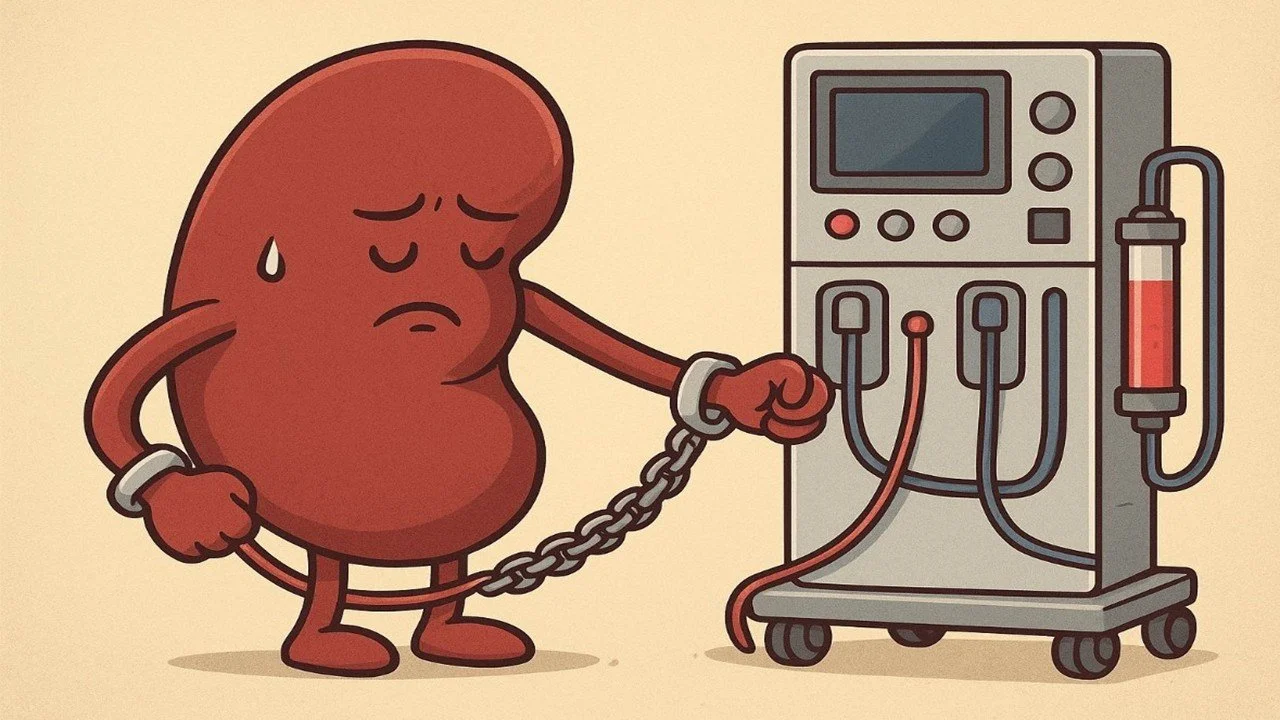
This week, we will discuss whether less is more when it comes to discontinuing dialysis in patients with AKI and a chance to recover.
Holy Mackerel! This week we will discuss fish oil use in maintenance hemodialysis patients. Could this be the one thing that bends the curve on CV mortality, or is it just a red herring?
This week, we will discuss the phase 3 ORIGIN3 trial of atacicept, an APRIL/BAFF inhibitor for use in IgAN.
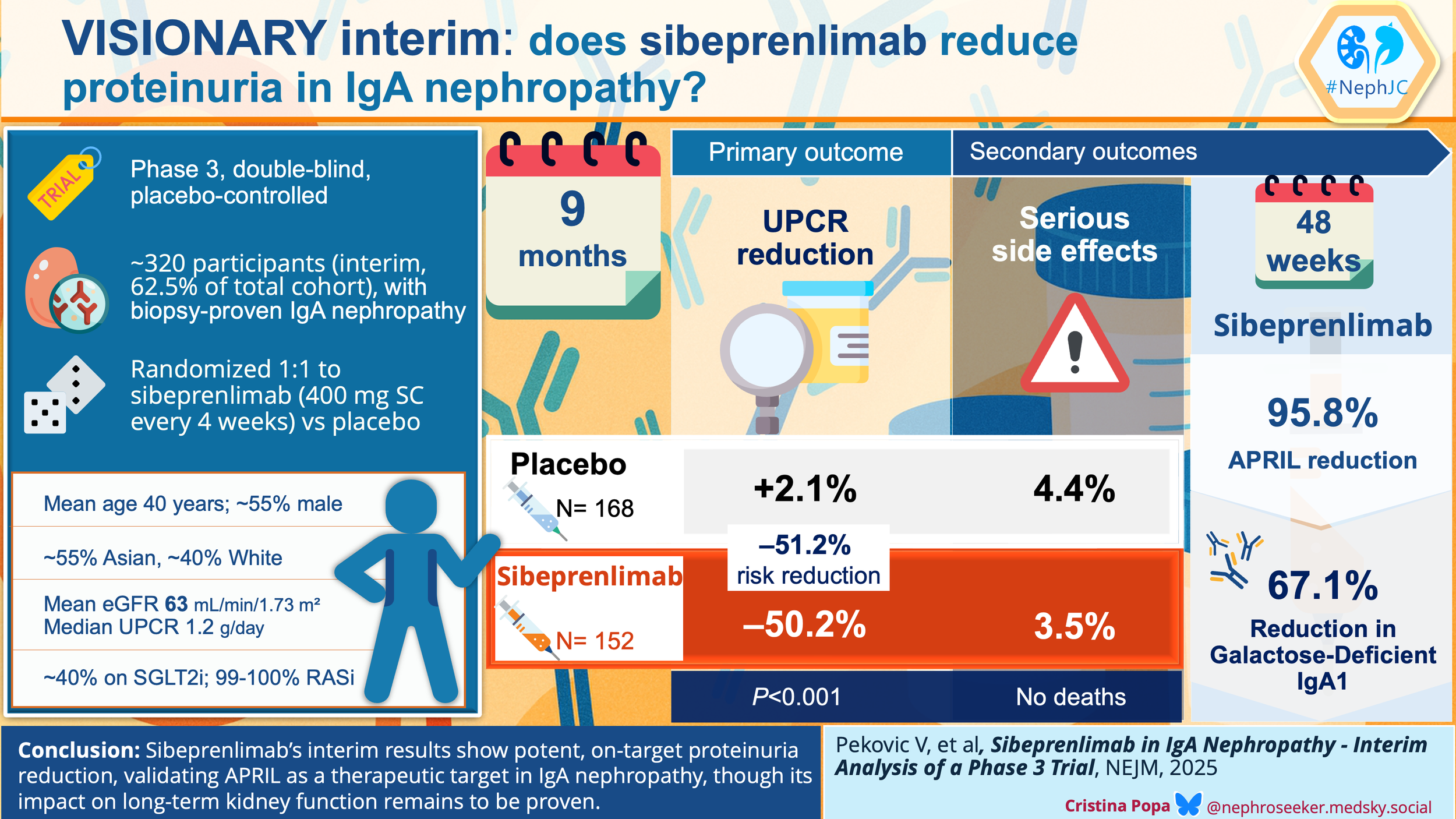
Day 3 of Kidney Week. Sibeprenlimab and Balcinrenone on NEJM and Lancet, plus a couple of other non-kidneywk studies.
Once again we have two curated archives of the discussion. Joel Topf just published his version for NephJC:
And Tejas of Nephrology On-Demand once again published his curation:
aPLA2R is the first blood test specifically for nephrotic syndrome. It has recently been licensed by the FDA and we want to have an open and frank discussion on how this test may be used in clinical medicine. To aid in this discussion we will be looking at two papers.
The first was highlighted by CJASN's eJC and was covered summarized by Joel Topf and his Fellow, Bilal Saleem:
The second article was published this past Spring in NDT. It is an industry sponsored trial of ACTH for the treatment of membranous nephropathy. Swapnil Hiremath summarized it for #NephJC
And additionally here is a link to the KDIGO Glomerulonephritis Recommendations.
Please join us on Twitter at 9pm Eastern Daylight. Use the hashtag #NephJC.
A bit belatedly, the pubmed comment is up from the great discussion from July 8th on MesoAmerican Nephropathy here.
FOAM Reduction bills itself as a Twitter-free means of receiving FOAM (free open access medical education). The July 25th edition touched on the recent hyponatremia guidelines and included a shout out to our TweetChat. We are honored.
“Hyponatremia
Rumor has it that hyponatremia is near the top of UpToDate’s most searched list. Probably because it is so damn common (15-20% of hospital admissions) and the algorithm is a pain. Enter the Hyponatremia Guideline Development Group (I want to party with these guys), who recently published a new clinical practice guideline for diagnosis and treatment of hyponatremia. It is surprisingly easy to follow, by eliminating volume status guesses and depending on urine osmolality, urine sodium to determine the etiology of water excess.
The guideline can be found here and if you want a more expert take on the guidelines, a group of nephrologists performed a Twitter-based journal club (#NephJC, @nephjc) dissection on the guideline here.
I included the diagnosis algorithm from the new guideline below, along with the algorithm I see used most often.”
Did we mention we had a news letter? (please sign up)
If you were on the mailing list, you can see the letter here. The e-mail covers three important pieces of NephJC news
Our next TweetChat is next Tuesday at 9 PM. We are looking at the NEJM article about VUR prophylaxis. Interesting paper. Pascal Lane did a wonderful summary of the study.
We are changing the way we do video interviews. These will no longer be scheduled events but, instead will get done when we can arrange a time with the most interesting scientists willing to talk to us.
We are exploring the possibility of doing a Live NephJC during Kidney Week in Philadelphia. We have a four question Survey Monkey to try to gauge how much interest there is in this idea.

I have been a dedicated Mac user since 1991 and the turn around that Apple has pulled off never ceases to amaze me. Look at the OS distribution of readers of NephJC.com. Apple has 59% of visitors between iPhone and MacOSX. Incredible.
But I don't think all of the credit can be given to Stevie J and his merry band of Nexters. Look at the twin debacles of Vista and Win8. Together, those two OS's can't smell the OS share of XP whose latest update was over 6 years ago!
Tejas continues to be a great supporter of the NephJC effort. He provides curated transcript to our latest Tweet Chat.
The comment for the tweetchat of #NephJC 5, on the POSEIDON trial is belatedly up on PubMed Commons here.
The investigators focused on how the disease emerged in the last 30 years and have tried to match chemical exposures to this time line and have come up with Monsanto's herbicide, Round-Up.

Here is the pubmed listing for the investigation
An RCT in Hemodialysis patients that is positive? Where do I sign up!
Spironolactone Reduces Cardiovascular and Cerebrovascular Morbidity and Mortality in HD Patients http://t.co/VgPvhrLcS7 potential 4 #NephJC
— Matt Sparks (@Nephro_Sparks) July 10, 2014
Think JACC would make this open access?
Just after we finished the Mesoamerican Nephropathy twitter chat I received the following e-mail:

What a great comment. We usually measure success by the number of people that engage in the conversation but there is another group of people who listen without talking. Great to hear from one of them to remind us that there are multiple ways to get value from NephJC.

The editors of Nature Reviews Nephrology were some of NephJC's earliest supporters. One of the ways they supported us was by suggesting an article for discussion. We decided to use that article and they even made that article open access. This is a limited time offer so make sure you run over to their site and download the study. We are so appreciative of all the support the crew at Nature Reviews Nephrology has offered NephJC. Thank-you guys.
We will be discussing this interesting Perspective on Twitter at 9PM Eastern on Tuesday July 8. Use hashtag #NephJC.

This was a a game of one-on-one with Topf interviewing lead author Somjot Brar
NephJC will be doing a live Google Hangout tonight, Tuesday at 9pm EDT. We will have Somjot Brar, the lead author of POSEIDON and Peter McCullough cardiologist and expert on contrast nephropathy joining Joel Topf.
We will try to take questions from people watching, so tweet your questions with the hashtag #NephJC and we will forward them on to our panel of experts.
At the end of the discussion we will announce the next NephJC article.


