#NephJC #TenPosts Nov 17, 2026, 9pm EST
JAMA Intern Med. 2026 Oct 22:e265989. doi: 10.1001/jamainternmed.2026.5989.
Video Decision Support and Advance Care Planning in Older Adults With Advanced Kidney Disease: The VIDEO-KD Randomized Clinical Trial
Angelo E Volandes, Joshua R Lakin, Yuchiao Chang, Charlotta Lindvall, Lisa M Quintiliani, Andrew L Lundquist, Annie Liu , Manjula Kurella Tamura, Mark Unruh, Susan P Y Wong, Aretha Delight Davis, Cynthia Garde, Lori Henault, Upeka Samarakoon, Amresh Hanchate, Ernest Mandel, Jamie A Green, Kyla Lawson, Seth N Randa, Michael K Paasche-Orlow
PMID: 42911803
PMCID: PMC13691914
Introduction
Over the past five decades, the proportion of people over 65 years old has nearly doubled from 5.5% in 1974 to 10.3% in 2024, as shown by data from the United Nations Population Fund (UNFPA). The latest Global Burden of Disease analysis estimates that the number of adults living with CKD has more than doubled from 378 million in 1990 to 788 million in 2023. Over the same time period, the global population receiving kidney replacement therapy nearly tripled, reaching 4.59 million individuals (GBD 2023 Chronic Kidney Disease Collaborators, The Lancet, 2025). In the US alone, more than 130,000 people start dialysis every year at a median age of 65 (Johansen, et al., AJKD, 2026). As the population ages, decisions surrounding dialysis initiation become increasingly complex, particularly among adults with multiple comorbidities and frailty, in whom the benefit of dialysis is far from guaranteed. In a target trial emulation of more than 20,000 US veterans aged 65 years and older with an eGFR below 12, starting dialysis bought roughly 9 extra days of life over 3 years, while costing about two weeks of time at home (Montez-Rah, et al., Ann Intern Med, 2024).
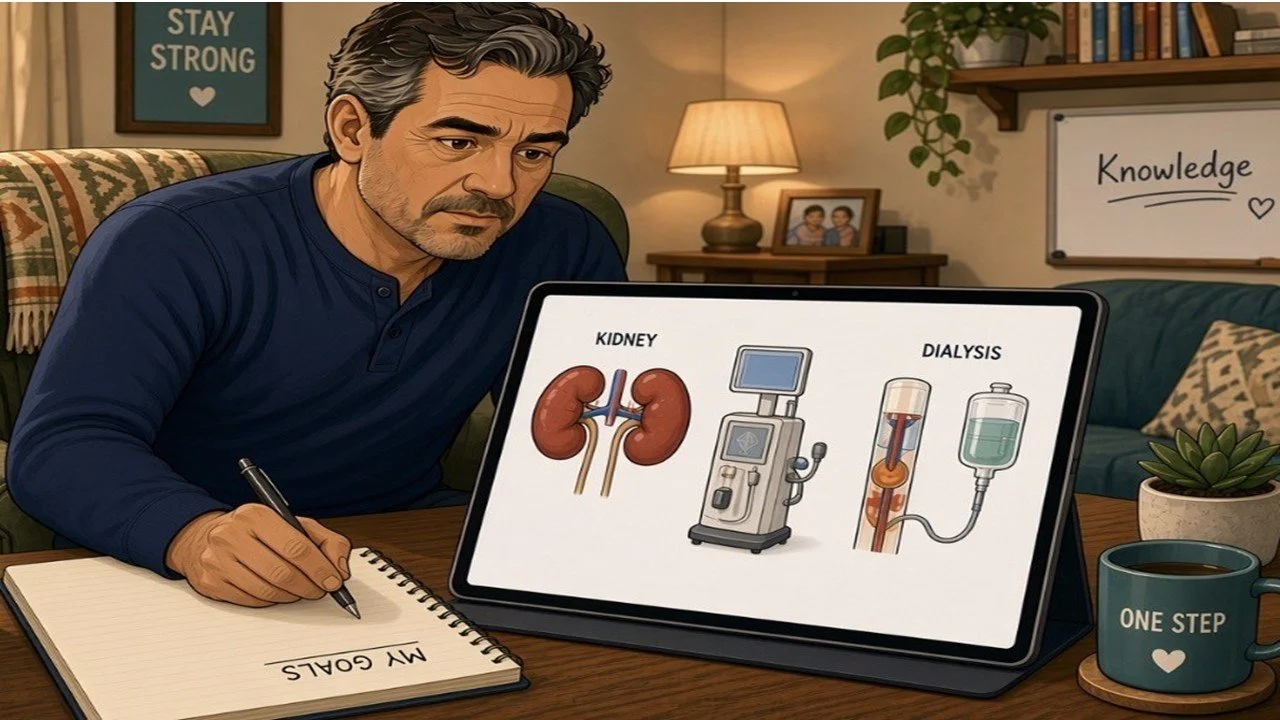
Advanced care planning (ACP) is a patient-centered process through which individuals explore and communicate their values, goals, and preferences regarding their future medical care. ACP facilitates conversations between patients, families, and healthcare providers and supports shared-decision making (Franco, et al., Mo Med., 2025). Despite its importance, ACP remains inconsistently integrated into routine nephrology care. In a national cohort of 821 older US veterans with incident kidney failure (mean age 80.9 years), discussions about dialysis were documented in 55.6% of patients, while supportive care was addressed in just 32.4% (Bradshaw, et al., AJKD, 2020). Could a brief video-based decision aid help improve treatment and conservative management decisions between doctors and patients? The Video Decision Support and Advance Care Planning in Older Adults With Advanced Kidney Disease (Volandes, et al., JAMA Internal Medicine, 2026) tries to address this gap by comparing a two-part intervention with usual care in older adults with advanced CKD who would eventually have to choose between hemodialysis, peritoneal dialysis, and conservative care.
This is not the field’s first attempt to address this problem, nor even this group’s. In a 100-patient pilot RCT, the same investigators found that a supportive kidney care video improved knowledge no more than a verbal script did and did not shift preferences (Eneanya, et al., Am J Nephrol, 2020). Other approaches improved decision quality (the DART web-based decision aid; Ladin et al., Ann Int. Med, 2023) or ACP engagement (CKD clinic coaching; Lupu DE. et al., AJKD, 2022), but none measured whether the conversation actually made it into the medical record where the next clinician can find it. That's where VIDEO-KD comes in.
Methods
The Study
Trial design: multicenter, 2-group, parallel-design randomized clinical trial conducted across 12 ambulatory clinics, out of which 11 were nephrology clinics and 1 primary care clinic. The study was conducted from June 2021 to March 2025, so recruitment began in the middle of the COVID-19 pandemic; the protocol allowed remote consent and study visits.
Funding
Federal grant from NIH/NIA (R01AG066892), officially titled Improving Medical Decision Making for Older Patients with End Stage Renal Disease. The funder had no role in the trial.
Inclusion criteria
Adults ≥65 years with advanced CKD (eGFR ≤ 30mL/min/1.73m² )
Established patients (at least one prior visit at the site) whom the treating clinician agreed could be approached
Exclusion criteria
Current dialysis treatment
Prior kidney transplant
An existing physician/practitioner or medical orders for life-sustaining treatment (POLST) or medical orders for life-sustaining treatment (MOLST) form
Inability to provide informed consent
Primary spoken language other than English or Spanish
Cognitive impairment (screened with the Short Portable Mental Status Questionnaire)
Participants were identified through electronic health record (EHR) review and confirmed by the treating clinician.
Intervention
The intervention was a certified 12-minute video decision aid. The video started with a broad discussion of the goals and values central to ACP and then depicted 3 treatment options for patients: hemodialysis, peritoneal dialysis, and conservative kidney management. The video used plain language narration (calibrated to a fifth-grade reading level, in English or Spanish) and a visual approach to show the main aspects of the three methods. The video aid was designed to help patients understand their options in order to make an informed decision afterwards. After seeing the video, participants created a ViDEC (video declaration): a video, audio, or written recording of their personal treatment preferences and values regarding kidney disease management. At any point during the study, ViDEC could be rerecorded. The intervention was delivered by trained nurses and social workers.
Regarding the control group, the participants received usual medical care (without video aids/structured patient recordings, and with no restriction on other clinical care).
Participants were assigned a 1:1 ratio using permuted blocks stratified by site. Randomization was done by computer within Research Electronic Data Capture (REDCap). Outcome assessors were masked to group assignment, and statistical analyses used masked group indicators. The intervention did not allow blinding given the nature of the intervention.
Outcomes
The primary outcome: ACP documentation to the EHR within 12 months of enrollment or death, whichever came first.
Important note: ACP documentation was broadly defined as any recorded discussion of goals of care, treatment limitations, palliative or hospice care, surrogate decision makers, or treatment options. No decision had to be reached for a note to count. Notes were screened with validated natural language processing software (ClinicalRegex), and every flagged text block was adjudicated by trained research staff masked to group assignment.
Secondary outcomes included:
Documentation of a discussion about treatment options for advanced kidney disease
Individual ACP documentation domains, like goals of care conversation, limitation of life-sustaining treatment, hospice, palliative care, medical conservative management, and time-limited trial of dialysis
Stated treatment preferences
Knowledge of treatment options and decisional certainty.
Several outcomes planned in the protocol (decisional conflict, ACP engagement, preferences reassessed every 2 months, concordance between preferences and care received, quality of life, and cost per QALY) are not reported in this paper.
Statistical analysis
All analyses followed the intention-to-treat principle. The primary outcome was compared between groups using unadjusted absolute rate differences with 95% confidence intervals, while statistical significance was assessed using logistic regression adjusted for study site. Treatment preference distributions were analyzed using Fisher’s exact tests. For survey-based outcomes, post-intervention responses in the video group were compared with baseline responses in the control group, which completed only the enrollment assessment. No data were missing for ACP documentation outcomes, because the EHR was reviewed for every participant. The planned sample size was reduced from 600 to 450 participants following a blinded interim assessment by the data and safety monitoring board, which lowered statistical power from more than 90% to 80%. Statistical significance was set at a 2-sided P ≤ .05 for the primary outcome, while secondary analyses were considered exploratory, without adjustment for multiple comparisons.
Results
Study flow
Over a period of 45 months, electronic health record screening identified 8077 potentially eligible patients; clinicians excluded 727. After a positive cognitive screening and consenting, 456 patients were enrolled and randomized. Three were excluded immediately post-randomization leaving 453 for the trial (5.6% of those screened).
Figure 1. Flowchart of study population from Volandes et al. JAMA 2026
Patient characteristics
Mean age at enrolment was 78.8 ⨦ 6.4 years; 58.1% being males. Participants were predominantly White(82.8%). Some knowledge of dialysis was reported in 73.2% vs 64.0%, and knowledge of conservative management was reported in 47.4% vs 38.2% among the intervention and control arms, respectively. There were a few other chance imbalances: the intervention arm had more college graduates (52.2% vs 45.8%) and people living alone (33.8% vs 27.1%) and fewer Black (5.7% vs 11.1%) and married (52.6% vs 61.3%) participants.
Decisional certainty was reported by 58.3% vs 54.7% among the intervention and control arms at enrollment.
Table 1. Baseline characteristics from Volandes et al., JAMA 2026
Primary outcome
Within the 12-month follow-up, 72 patients did not complete the 12-month follow-up, of whom 27 (6%) patients had died and 16 had withdrawn. Of those who had not completed the 12-month follow-up, there was a similar proportion in both arms. Because the outcome was ascertained from the EHR, none were missing for primary analysis. With an intention-to-treat analysis, ACP documentation was done in 56.6% vs 40% in intervention and controls, respectively, with a rate difference of 16.6 percentage points (7.5-25.7%, p<0.001).
Documented discussion on treatment options
Documented discussion of kidney failure treatment options was also more frequent in the intervention arm (46.1% vs 31.6%; rate difference 14.5 percentage points, 95%CI 5.6-23.4%, P= 0.001).
Individual components of ACP documentation were also examined for in both arms, including the goals of care, code status limitation, hospice, and palliative care. (Table 2) Documentation of conservative kidney management was identical in both arms (10.1 vs 11.1%), and time-limited trials of dialysis were almost never documented (0 vs 2 patients). The primary result is therefore driven mostly by documented discussions of treatment options.
Treatment preferences
No clear decision was reported by participants in intervention and control arms (39.6% vs 41.3%) at baseline; however, after the video, only 13.2% remained undecided. Conservative management was preferred in 50.7% vs 31.8% in intervention vs controls. Preference for PD improved with the intervention; however, preference for HD remained unchanged. Note that this is not a head-to-head randomized comparison at the same time point: intervention participants answered immediately after watching the video, at the same visit, whereas controls answered only once, at enrollment.
Figure 2. Stacked columns showing participant preference pre-& post intervention versus controls from Volandes et al., JAMA 2026
Knowledge and decisional certainty
Within the intervention arm, self-reported knowledge of dialysis rose by 13.1% and knowledge of conservative kidney management by 30%, respectively. Decisional certainty rose modestly from 58.3% to 70% (=11.7%). As the authors acknowledge, a 30-point gain in knowledge and a 12-point gain in certainty suggest that what keeps patients uncertain is not only missing information. Again, the control group only has baseline data.
S2 eTable 3. Knowledge and decisional certainty at and after enrollment from Volandes et al., JAMA 2026
Comfort with interventions
Comfort in watching videos was reported in 88.8% with 92.8% watching video repeatedly. Video based ViDECs (46.7%) were the preferred method among 209 reported participants followed by written (25.4%) and audio recording (18.4%). It was interesting to note that even after repeated views, only 36 participants re-recorded their ViDECs at least once during the trial.
Discussion
Imagine you have to travel to a place urgently and have options: a car, a train, or a flight, without exact knowledge of the details associated with each mode of transportation (i.e., time to destination, safety, and cost). Consider a similar scenario in elderly adults advancing to end-stage kidney disease without a plan or knowledge of dialysis modalities and conservative management options, coupled with the urgency of immediate decision-making. Advanced care planning (ACP), education, and documentation are important in guiding further management. Patients need to understand the available options, and physicians need to understand the patient’s perspective. Various ACP-based interventions have been explored in nephrology; however, patient-involved decision-making remains lacking.
A randomized trial involving 210 patient-surrogate dyads receiving dialysis (Song et al, JAMA Network Open, 2024) evaluated SPIRIT (Sharing Patient's Illness Representations to Increase Trust), a structured ACP intervention. Compared with usual care, SPIRIT improved patient-surrogate agreement on end-of-life treatment goals and surrogate decision-making confidence, although patient decisional conflict remained unchanged. A subsequent cluster-randomized trial (Song et al, AJKD, 2015) involving 426 patient-surrogate dyads across 42 dialysis centers further supported the benefits of SPIRIT, demonstrating improved agreement on care goals and reduced patient decisional conflict.
More recently, a 2026 systematic review by Tiansaard et al, J Ren Care, 2026, including 27 studies (10 randomized), identified several promising ACP strategies, including structured conversations, educational resources, peer support, and integration of palliative care teams. However, substantial heterogeneity in intervention delivery and outcome assessment precluded a meta-analysis, and the authors judged the evidence insufficient to reliably inform practice.. Furthermore, much of the available evidence comes from patients already receiving dialysis (only 4 of the included studies enrolled people with CKD G5 not on kidney replacement therapy), leaving uncertainty about how best to promote ACP among older adults approaching kidney failure.
VIDEO-KD tested a package: a video decision aid plus a patient-created declaration delivered to the treating clinician. It increased overall ACP documentation and documentation of treatment-option discussions, but not most individual ACP domains, and acceptability was measured only in the intervention arm. Because the 2 components were delivered together, we cannot tell whether the video, the ViDEC landing in the clinician’s inbox, or simply the extra attention did the heavy lifting. Patient-involved interventions improve decision-making, but does this video aid improve the process of ACP recording or improve the clinical outcomes? This latest multicentre study focused on the process of ACP documentation rather than on the outcomes for the patients involved. However, documentation does not necessarily indicate that a meaningful discussion occurred, that the patient fully understood the available options or that subsequent treatment decisions were consistent with their preferences. The investigators did not establish whether clinicians actually viewed the declarations or incorporated them into subsequent clinical decisions. This is important because the ultimate purpose of ACP is not simply to generate documentation, but to ensure that future treatment reflects the patient's values and preferences.
The most telling number in the paper may be the one the authors don’t emphasize. Immediately after the video, half of the intervention participants said they preferred conservative kidney care management; yet over the following year, that preference was lost in transmission. Whether preference faded, the clinician never watched the ViDEC, or the conversation happened but was charted as a generic “treatment options” note, this gap is precisely where potential next trials need to look.
Subject screening was EHR-based, and eligible patients were contacted through site investigators. Treating clinicians acted as gatekeepers, and only 1 in 4 approached patients consented (5.6% of those screened), with 5926 exclusions listed simply as “other reasons." Because allocation was concealed, this does not bias the comparison between arms, but it does raise the question of whom the results apply to. Older adults who agree to join an ACP video study, half of them college graduates, are probably more ready to talk about dialysis than the average patients in a busy CKD clinic. The sample size was also revised downwards (from 600 to 450) after a blinded interim review, which reduced power; the trial nonetheless met its primary endpoint. Finally, the 16 withdrawals and 72 incomplete follow-ups do not affect the primary result, which came from the EHR for every participant, but they will matter for the longitudinal outcomes still to be reported.
All enrolled patients stated their preference. The intervention group was reassessed immediately after the video at the same visit, whereas the control group was not reassessed. This asymmetry is the main weakness of the preference, knowledge, and certainty findings: they compare a post-video answer, given minutes after a carefully produced film and in front of the research staff who showed it, with a pre-anything answer from controls. Social desirability and recency can inflate such responses, and nothing is telling us whether they persist. The protocol planned to ask all participants about their preferences every 2 months; those data would allow a proper randomized comparison over time: intervention participants received extra time and attention from nurses and social workers, which controls did not. Even usual care might possibly change many of the responses in the control group (apart from the Hawthorne effect), so this is an important limitation, that only baseline data was collected and reported.
The video aids were designed to be more participant-friendly, using language pitched at 5th grade reading level in English or Spanish. The acceptance rate of the video aids supported this, with a comfort rate of 88.8%. However, many participants already had some knowledge of dialysis (more so in the intervention arm), and half had a college degree, which may have made the information easier to process than it would have been for patients with lower health literacy or no prior exposure to dialysis.
Another interesting point is the preference for conservative management in the intervention group. However, the authors note that there was no change in the preference for hemodialysis immediately after the video. After viewing the video, the proportion of undecided patients decreased considerably (39%→13% vs 41% in controls). While conservative preference increased to nearly 51%, hemodialysis preference barely changed. Balanced education cleared uncertainty without scaring patients off hemodialysis. Two caveats temper this. First, the formerly undecided moved overwhelmingly towards conservative care management (and PD), so it remains unclear whether the video was truly neutral, as its content is not freely available to readers. Interestingly, the protocol itself hypothesized that the video would shift patients towards medical management without dialysis, so this result was anticipated rather than unexpected. Second, almost a third of controls already preferred conservative care at enrollment, well above probably most of us seen in routine practice, which again points to a selected population.
In the era of super-intelligence, natural language processing (NLP) was used to identify the ACP recordings from EHR which were verified by an individual to ensure the word captures were appropriate. In a prospectively enrolled RCT, recording of ACPs could have been direct as the recordings were sent to physicians as well. The introduction of NLP has its own risk of missing out words in search as participants were allowed to document ACP in their own language. Finally, this intervention was conducted by trained nurses and social workers, at mostly academic associated clinics. This may make use of video aids less helpful in less education focused private practices, and generalizability matters.
Conclusion
A brief, well-liked video aid plus a patient-recorded statement increased documentation of advanced care planning. Educating patients about conservative management did not decrease the proportion preferring hemodialysis. Real world uptake and goal-aligned ACP outcomes still need testing.
Summary by
Nephrology specialist, Assistant lecturer, Romania
Assistant Professor, VMMC and Safdarjung Hospital, India