


Too sweet to be true? Prophylactic SGLT2 inhibitors before cardiac surgery
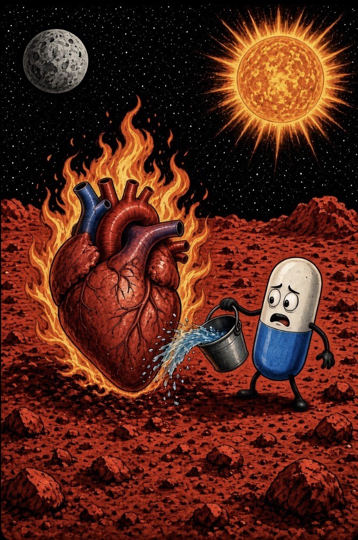
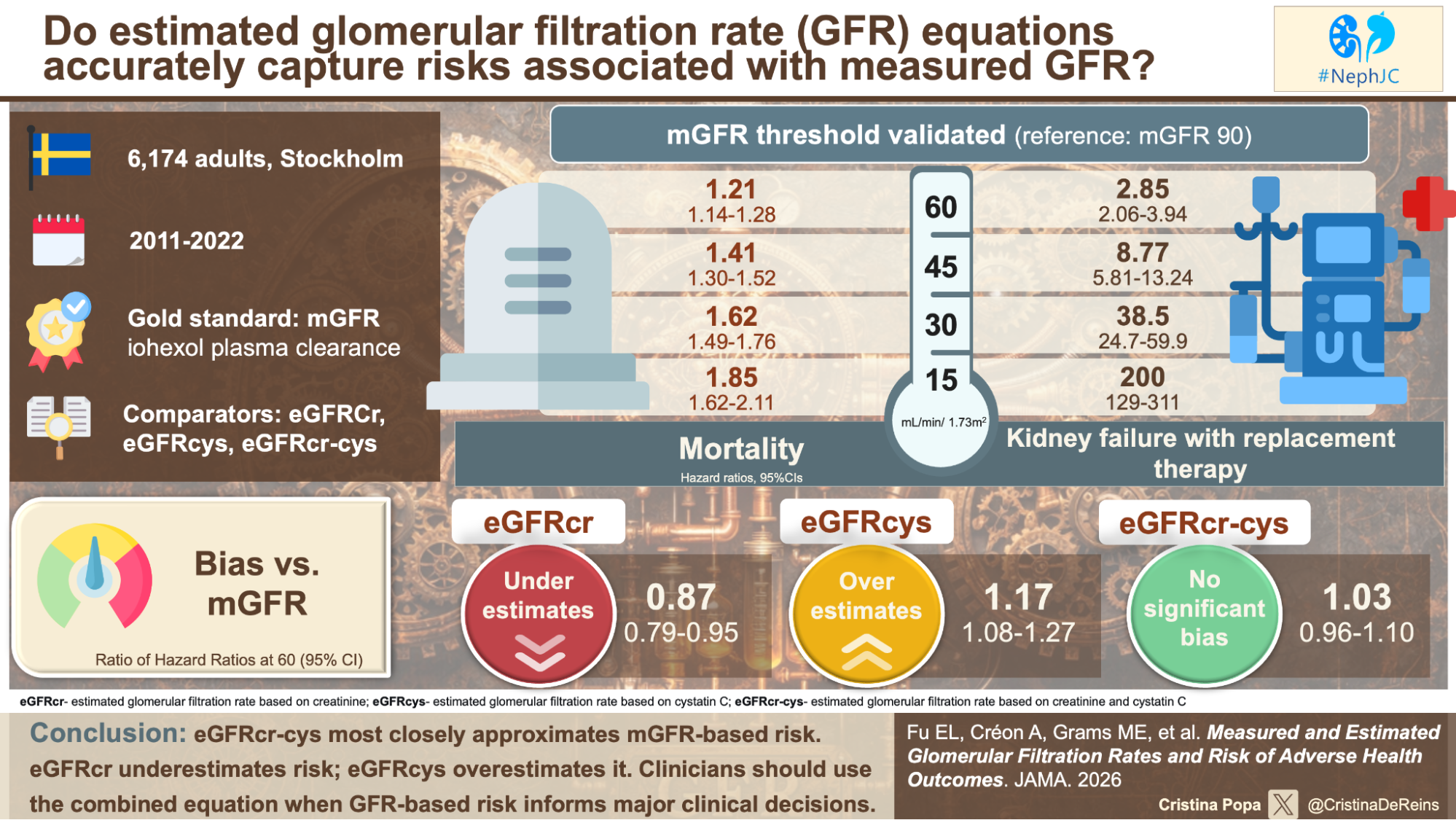
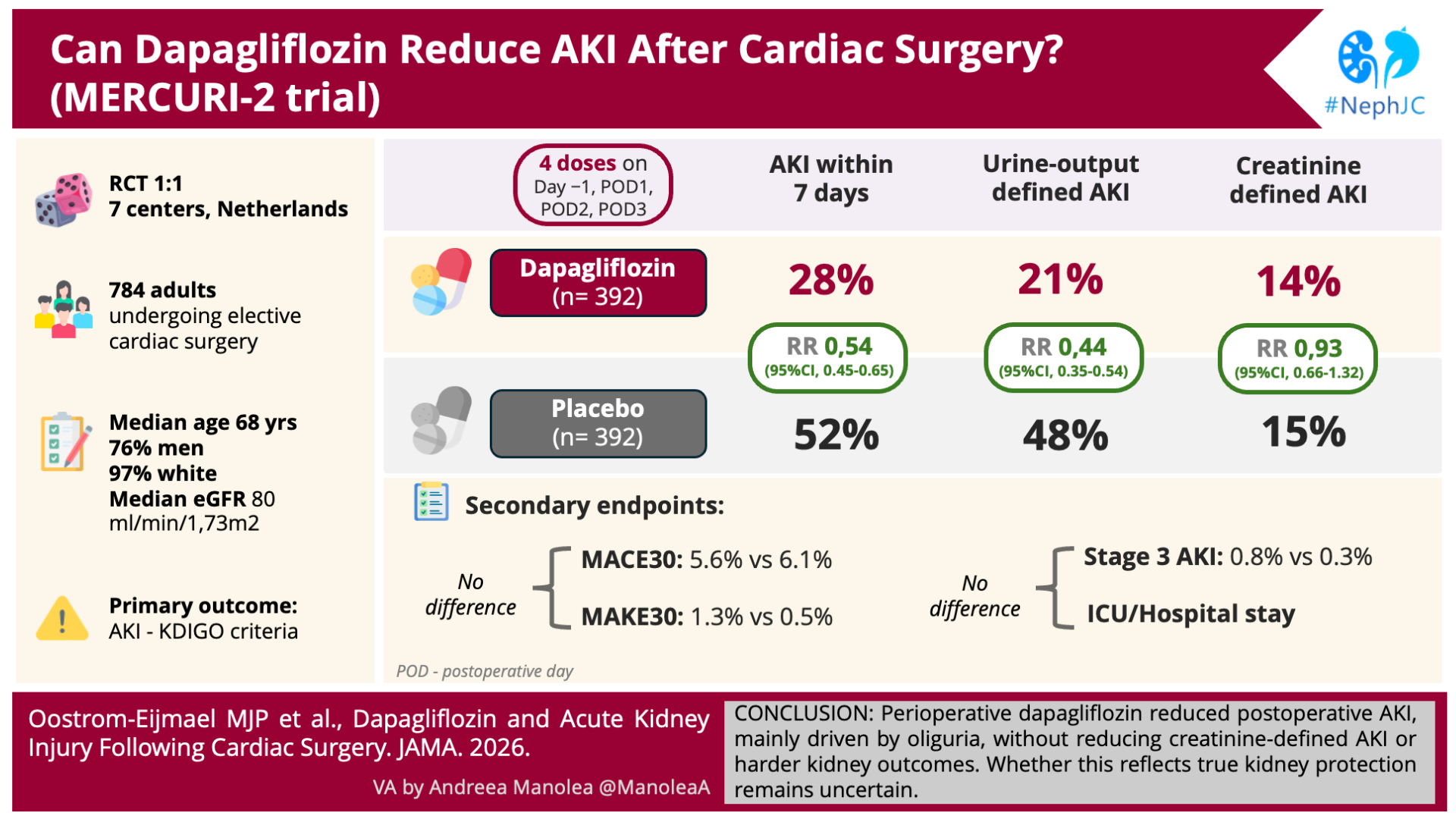
MERCURI-2 reports that dapagliflozin cuts postoperative AKI after cardiac surgery, but the headline result is mostly a urine-output story, not a creatinine one. That matters: urine output after surgery is easily swayed by anesthesia, fluid shifts, vasopressors, and a diuretic drug in the mix. Until dapagliflozin shows it protects kidney function, not just urine output.
MERCURI-2: The Visual Abstract
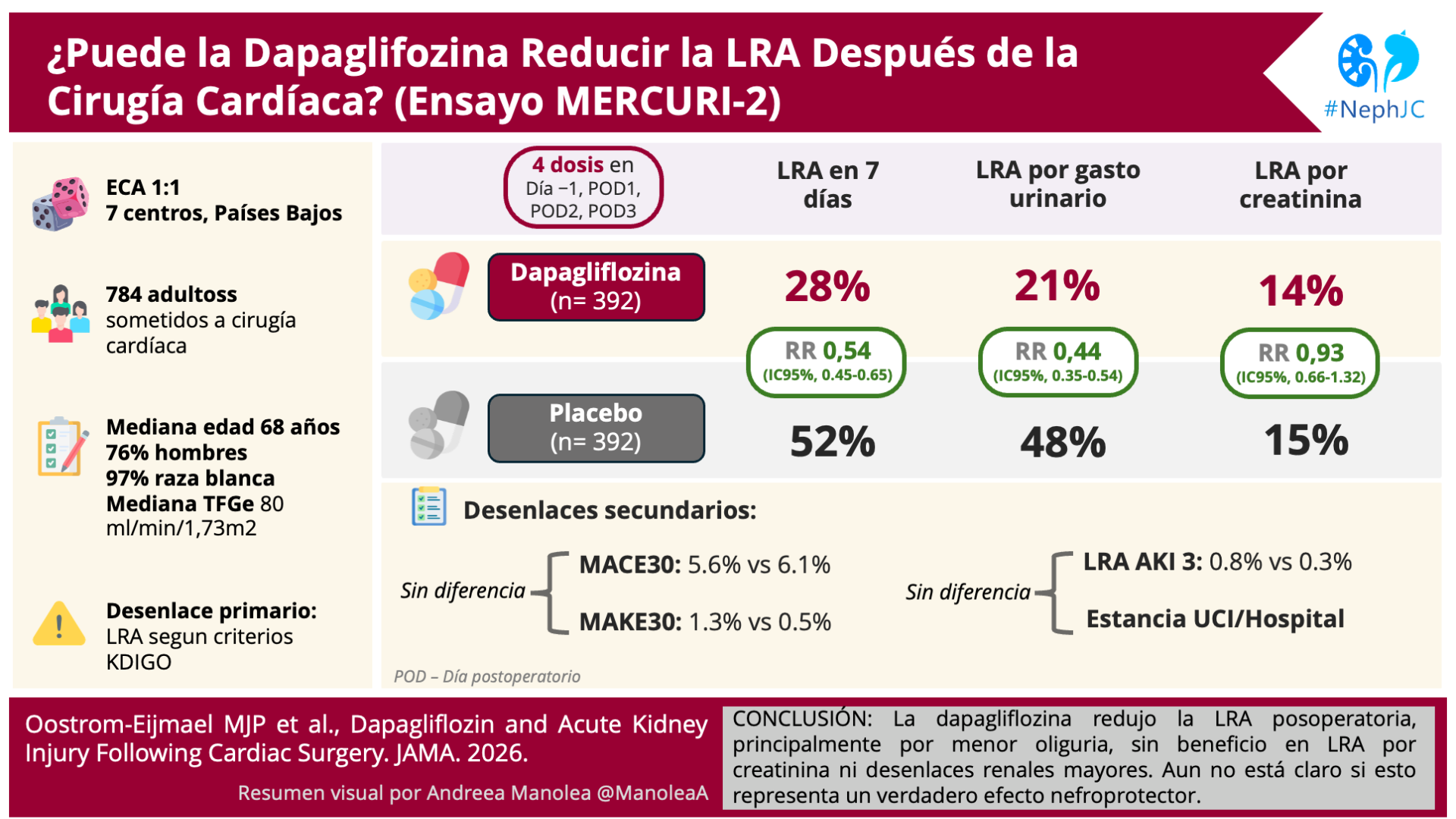
MERCURI-2: El Resumen Visual
On the right TRACK? Rivaroxaban to prevent cardiovascular events in advanced CKD.

Track: The Visual Abstract
Can rivaroxaban reduce cardiovascular events in advanced CKD?
The TRACK trial compared low-dose rivaroxaban with placebo in patients with stage 4–5 CKD and dialysis-dependent kidney failure at high cardiovascular risk.
Check out the latest VA and review the next #NephJC.
Track: El Resumen Visual
¿Puede rivaroxabán reducir los eventos cardiovasculares en la ERC avanzada?
El estudio TRACK comparó rivaroxabán a dosis bajas frente a placebo en pacientes con ERC estadio 4–5 y enfermedad renal en diálisis con alto riesgo cardiovascular.
Revisa nuestro más reciente resumen visual y acompáñanos en la próxima discusión de #NephJC.