



Is a lower versus higher phosphate target beneficial to patients undergoing hemodialysis?
Check out this crisp VA by Dr Sejal Lakhani

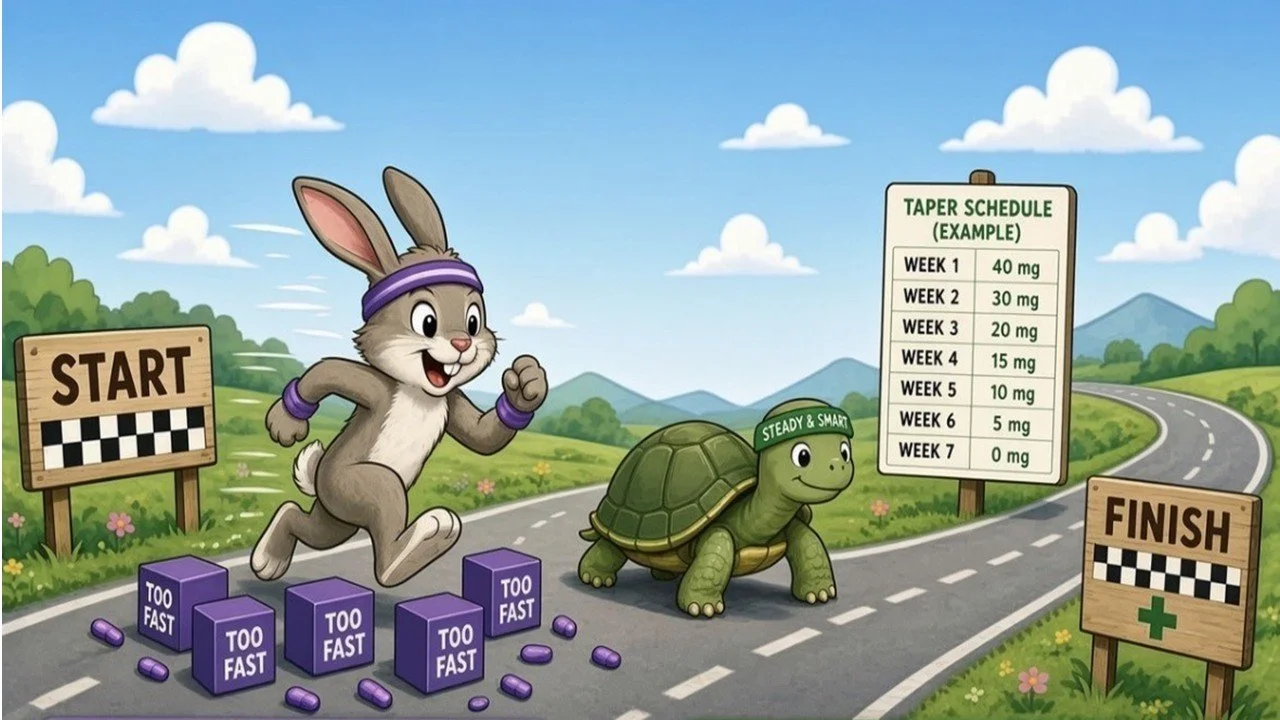
This week, we will discuss the best schedule for tapering steroids in adult patients with podocytopathies (MCD/FSGS).
This week, we will discuss the use of LLMs for the diagnosis of complex nephrology cases. Can AI help nephrologists nail the correct diagnosis?
MERCURI-2 reports that dapagliflozin cuts postoperative AKI after cardiac surgery, but the headline result is mostly a urine-output story, not a creatinine one. That matters: urine output after surgery is easily swayed by anesthesia, fluid shifts, vasopressors, and a diuretic drug in the mix. Until dapagliflozin shows it protects kidney function, not just urine output.
Is a lower versus higher phosphate target beneficial to patients undergoing hemodialysis?
Check out this crisp VA by Dr Sejal Lakhani
Check out the summary on eGFR diference chat, done by NephJC intern Bogdan Agavriloaei
Basado en los datos del estudio CRIC, este análisis profundiza en si esa discordancia (TFGe dif) es solo “ruido”… o una señal clínica que hemos estado ignorando.
Echale un vistazo al resumen visual realizado por el equipo de internos de #NephJC Dr Sai Vani Yellampalli y Akshaya Jayachandran
Based on data from the CRIC study, this analysis dives deep into whether this lab mismatch is just noise… or a clinical signal we’ve been missing.
Check out the beautiful visual abstract made by our NephJC interns Sai Vani Yellampalli and Akshaya Jayachandran. Great team work!!!
Check out CONFIDENCE recap
Check out the beautiful visual abstract made by NephJC intern Michelle Fravel.
El ensayo CONFIDENCE evaluó la combinación de finerenona + empagliflozina en ERC + DM2: mayor reducción de CACu a 180 días. ¿Estamos listos para iniciar la terapia combinada desde el principio?
Revisa el resumen visual por Michelle Fravel
In just over a decade of critical appraisal on NephJC, we have done several experiments. Some of them have worked out phenomenally well, such as the Freely Filtered podcast. Others were not ready for the time, such as the Google Hangouts. We want to try another such experiment, and hope we receive feedback to decide if this is something worthwhile that we should continue doing.
There are many studies and many trials and many reviews, and many guidelines that are published in Nephrology every week. Indeed, it is a golden era for randomized controlled trials in Nephrology. On the other hand, NephJC only occurs twice a month. It does take a lot of work, with the detailed critical appraisal, readable summary, visual, abstracts, and the chats. Sometimes the occasional, irregularly irregular podcast. Hence, we cannot deal with all the worthwhile studies that are coming out.
Enter NephJC Shorts.
This week, we are publishing a few short blogs. The purpose here is to cover some notable studies in brief. They do not receive the full, long, NephJC treatment. The articles we choose are those that the NephJC editorial team fancies, but suggestions are welcome. Since these are a shorter format, we don’t do a deep dive into the methods and don’t have a long list of the limitations and strengths. Think of them as a pithy version of the usual NephJC blog. Feedback welcome!
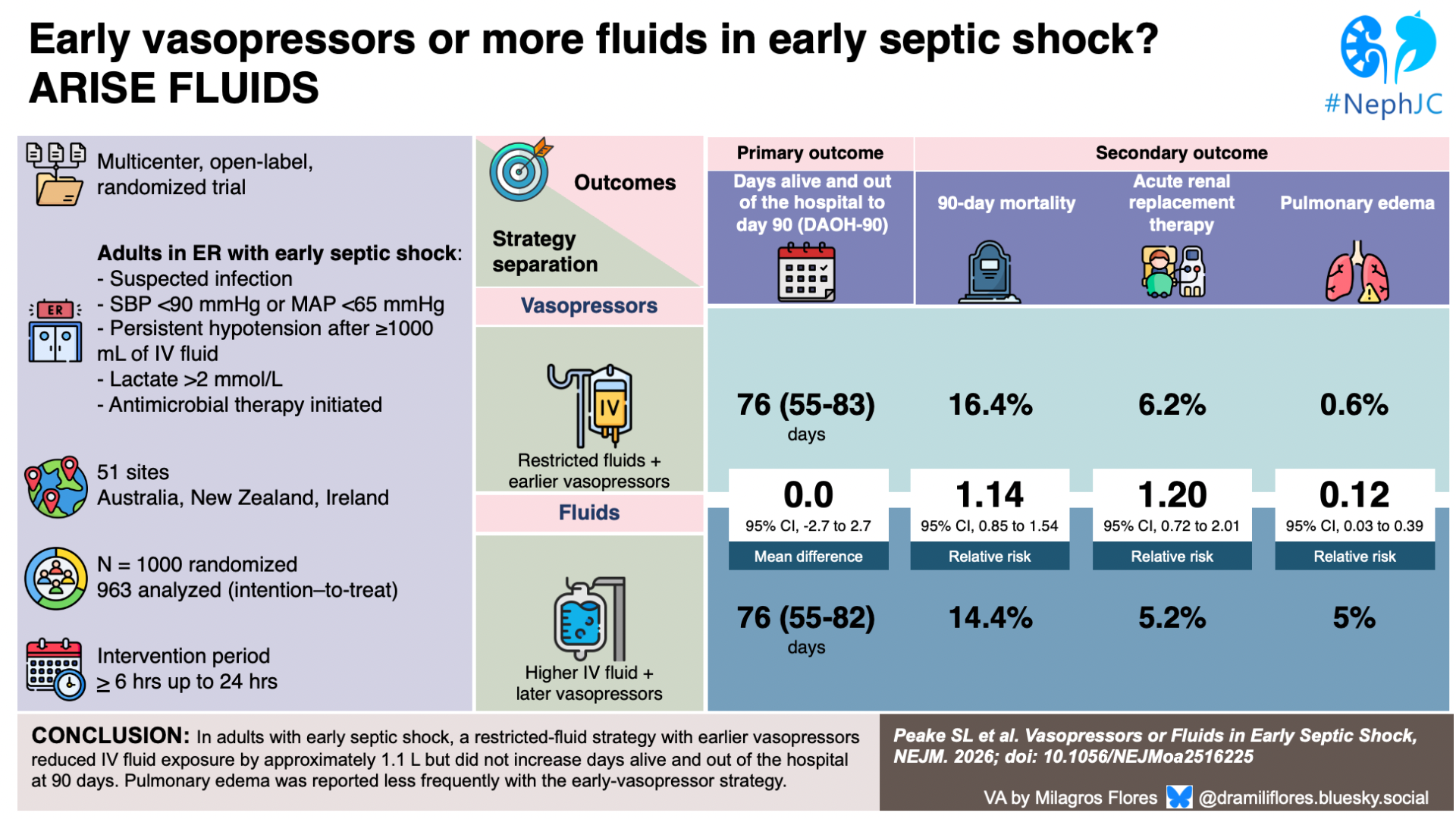
Once a patient with septic shock has received the first liter, what comes next? ARISE FLUIDS reshapes the ED shock strategy before 30 mL/kg: more fluid or earlier vasopressors?
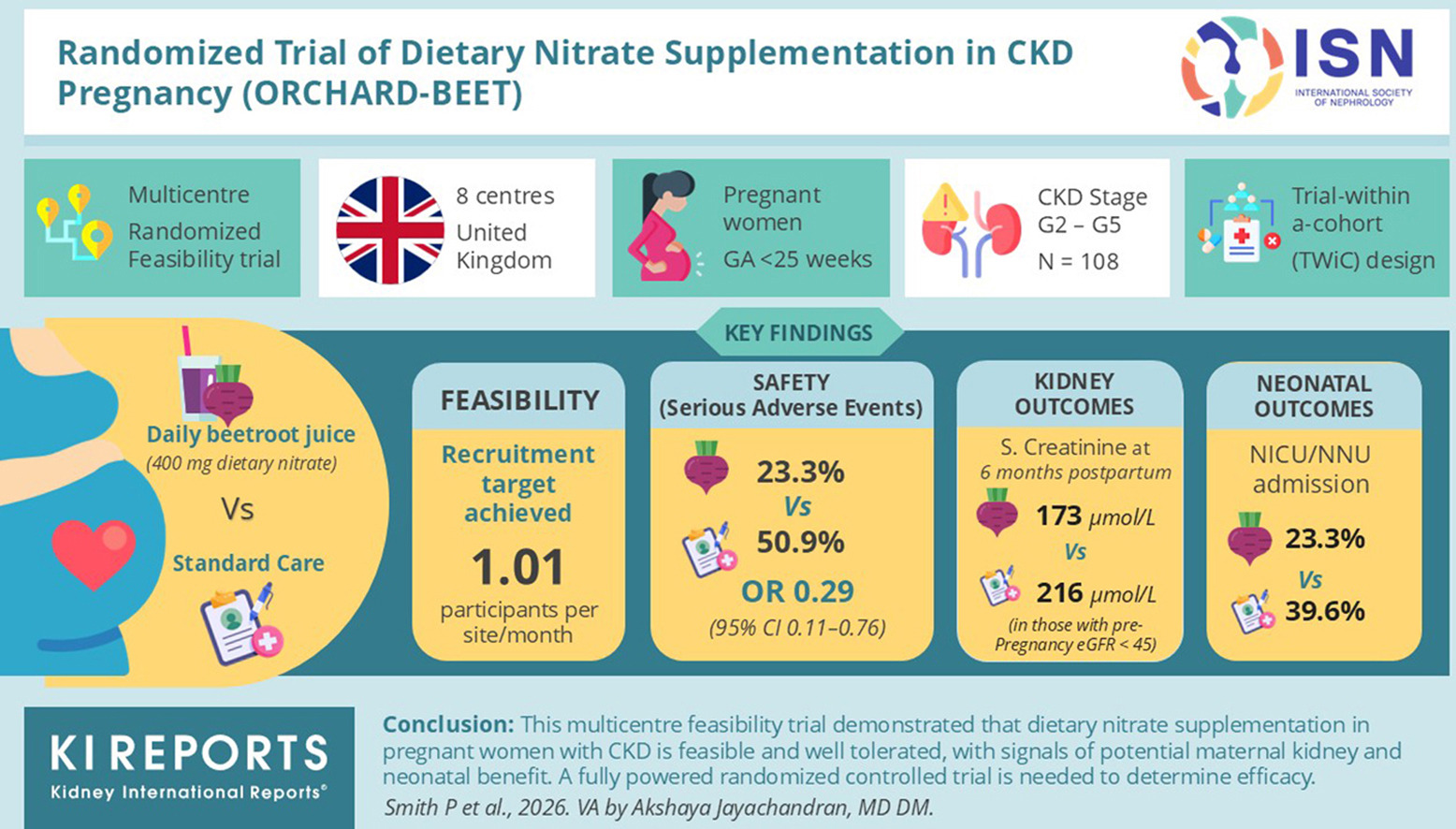
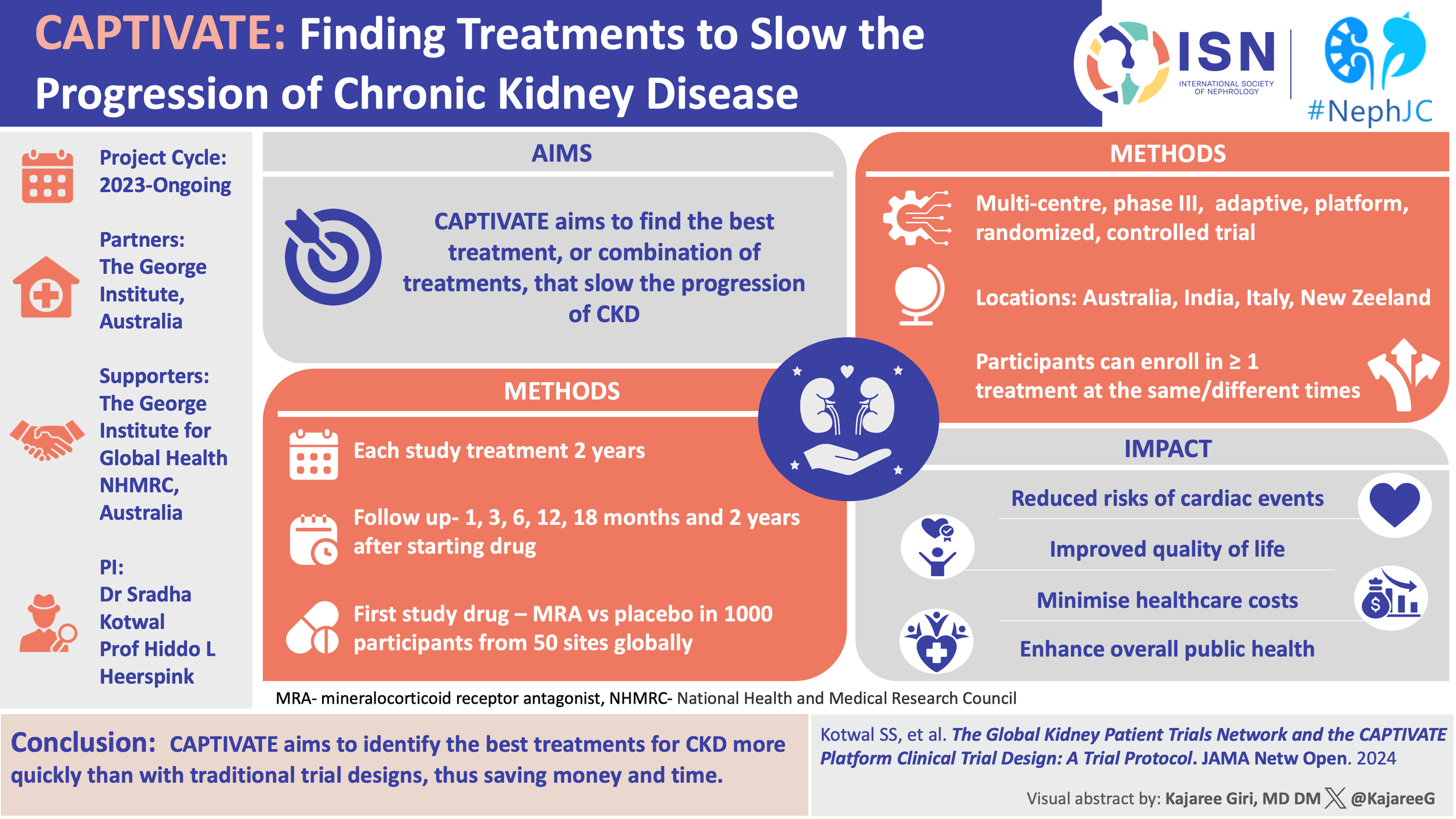
First trial in pregnancy and CKD after 30 years - aiming to test feasibility of nitrate administration in pregnant women with CKD
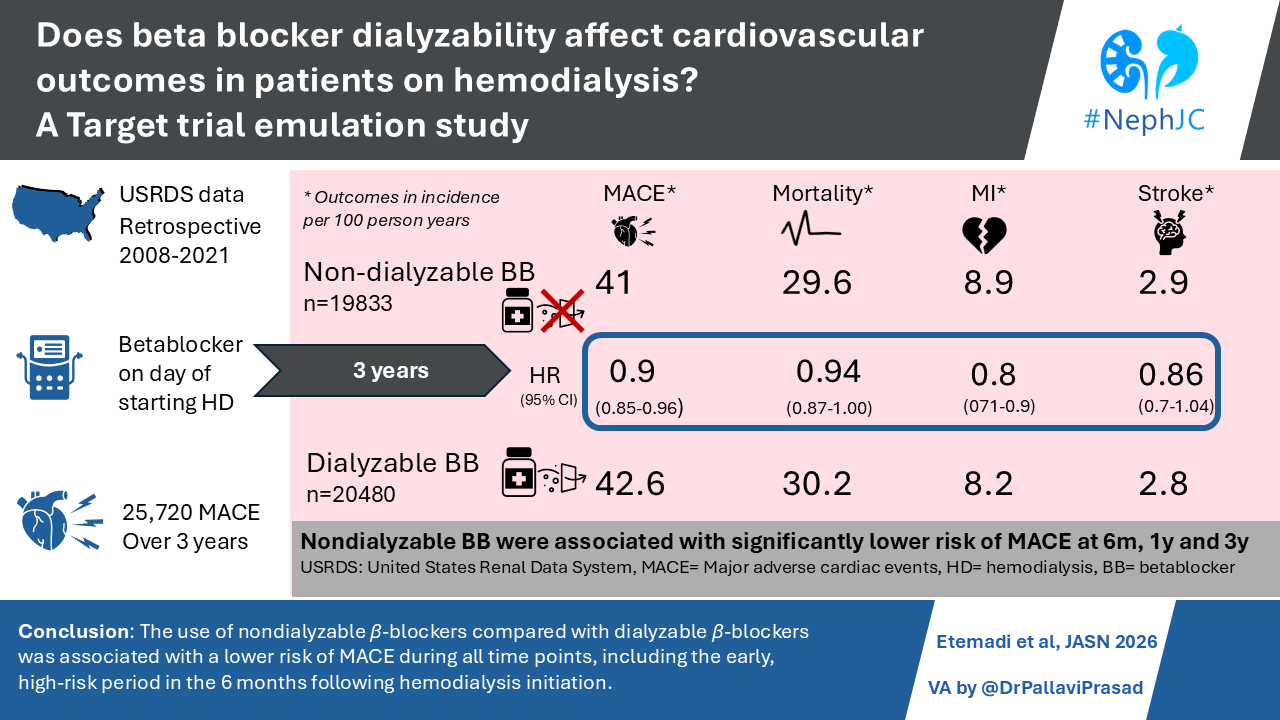
Non-dialyzable beta-blockers showed lower MACE, but the study was observational and shaped by regional prescribing habits that may hide confounding factors.
The NephJC Editors
Check out the beautiful visual abstract made by Kajaree Giri